What To Be Careful Of In Iceland?
The real hazards in Iceland, from scalding ground and sneaker waves to wind, car doors and F-roads, with the official sources that publish the warnings and why a ticketed lagoon is the controlled way into geothermal water.
What To Be Careful Of In Iceland?
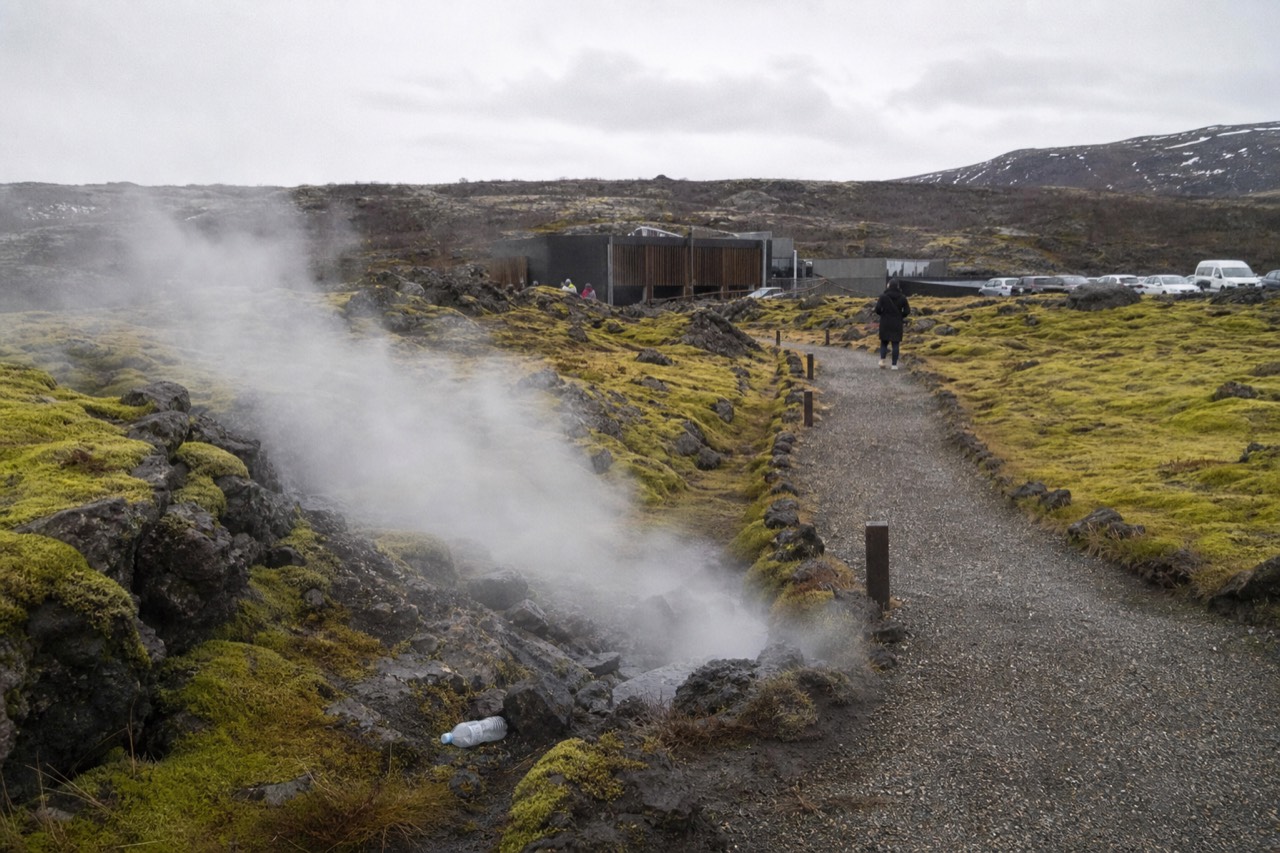
The main dangers to watch for in Iceland are scalding ground at unmarked natural hot springs, sneaker waves that strike without warning on black sand beaches, wind strong enough to rip car doors from their hinges, and mountain roads that stay closed for much of the year. Keep a safe distance from the water's edge, stay on marked paths near geothermal areas, and check road conditions before you drive. Every one of these is covered by an official Icelandic source, from the search-and-rescue association to the road administration, and none of them requires staying home. They require knowing where the warnings live and reading them on the day you travel.
Iceland is unusual in how well documented its hazards are. The Icelandic Association for Search and Rescue runs safetravel.is, a free service with live condition alerts and an SMS warning service, and the road administration publishes a live map of every mountain road's status. The emergency number is 112, with a backup number, 599-0112, published for cases where a call will not connect or the audio breaks up.
The catch is that most visitors never check these sources until something has already gone wrong. A day that starts with a calm lagoon booking can end on a black sand beach with a wave arriving without warning. This article walks through each hazard in turn, with the official wording attached, and then explains why a ticketed lagoon is the controlled way to get into geothermal water in the first place.
Why Is Unmarked Geothermal Ground Dangerous?
Unmarked geothermal ground is dangerous because scalding water can sit at or near the surface, sometimes hidden under a thin crust or layer of moss. The ground around hot springs may be unstable, and stepping through it can cause serious burns, since the surface itself can be hot enough to injure anyone walking over it. The same forces that make Iceland's lagoons warm, geothermal energy heating over 85% of the country's homes, also heat bare ground to temperatures that no swimmer should touch. At Krauma, the spa's own pages note the Deildartunguhver spring pumps 180 litres of 100°C water per second, and that figure is the venue's own published claim about the spring it sits beside.
The danger is not the ticketed venues. It is the unmarked spots: the roadside steam vent, the warm patch beside a hiking trail, the natural pool somebody mentioned in a forum post. Geothermal areas can change character quickly, and a crust that held a person's weight last month may not hold it this month. Business Iceland's general instruction for hazardous nature sites is to follow warning signs and respect rails and fences, because some risks are not visible at first glance, and unstable ground at hot springs is one of the risks it names directly.
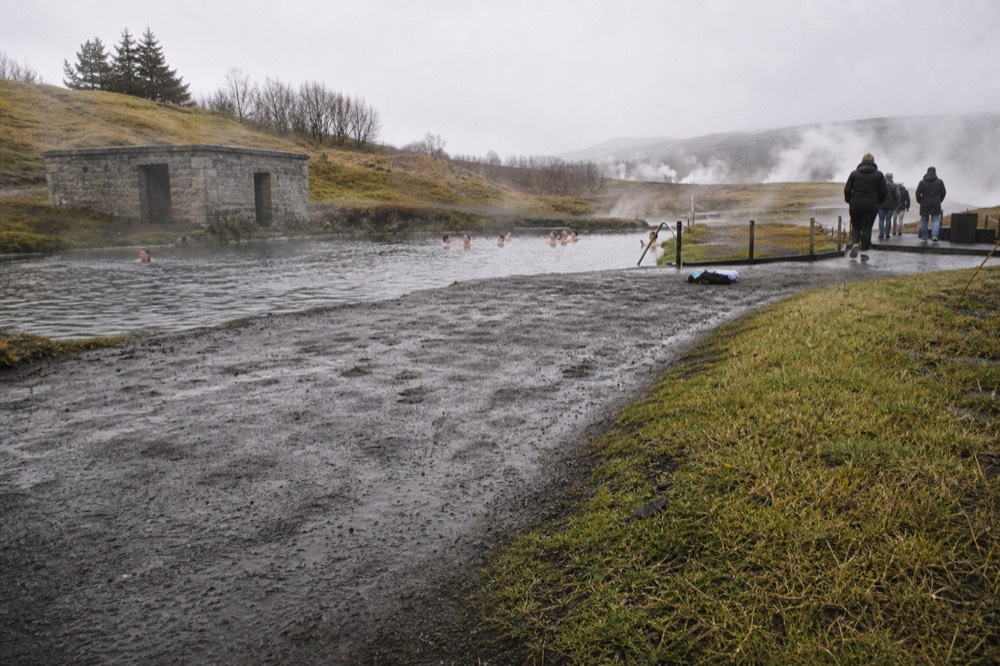
There is a second, quieter hazard in the same landscape: the water that looks inviting. A natural hot spring has no published temperature, no lifeguard and no one measuring anything. Compare that with the ticketed venues, where the numbers are on the record. Hvammsvík publishes the temperature of every one of its eight springs, from the tidal pool at around 35°C to the oldest spring on the property at 39-42°C, and its cold plunge is filled with seawater at ocean temperature. Secret Lagoon states its pool stays at 38-40°C all year, with the full volume of water replaced every 24 hours through continuous flow.
The distinction matters because Iceland's bathing culture is built on treated, monitored water. The national regulation on pool hygiene, nr. 814/2010, sets out disinfection and water-renewal requirements, and it is the same regulation that requires guests to wash without swimwear before entering. A ticketed lagoon operates inside that framework. A hole in the ground does not.
| Hazard | What the official source says | Where it is published |
|---|---|---|
| Unstable ground at hot springs | Follow warning signs, respect rails and fences; unstable ground at hot springs can turn life-threatening | Business Iceland safety guidance |
| Sneaker waves on black sand | Waves surge with zero warning, far higher and further than expected, and can sweep an adult out to sea in seconds | safetravel.is black beach safety page |
| Mountain roads | Openings depend on weather and snowpack; estimated dates appear on the road administration's seasonal page | Vegagerðin mountain roads page |
| Volcanic warning time on Reykjanes | Previous eruptions had warning times of roughly 20 minutes to just over four hours | Icelandic Meteorological Office |
Which Beaches Does The Official Wave Warning Actually Cover?
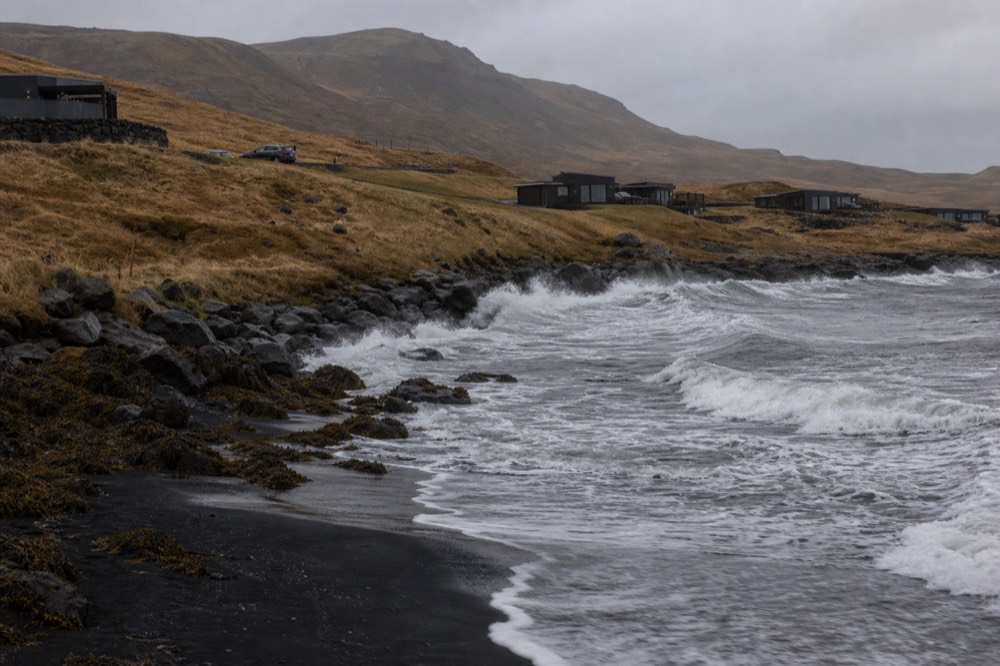
The sneaker-wave warning and the warning-light system attach to Reynisfjara, Kirkjufellsfjara at Dyrhólaey and Djúpalónssandur on Snæfellsnes, not to every black sand beach in the country, and applying either to a different beach is a mistake travellers make constantly. Business Iceland names those three beaches specifically, and safetravel.is describes a beach with a cliff and falling-rock hazard fitted with warning lights. Applying either to a different beach is a mistake, and a common one: travellers read the Reynisfjara advice and assume it describes every stretch of black sand they will walk on.
The advice itself is blunt. The safetravel.is rules for black beaches are to stay well back from the water's edge, never turn your back on the sea, keep children accompanied by an adult, and beware of falling rock near the cliff. The warning-light system runs yellow, orange and red: yellow means stay alert and cautious, orange means stay at least 25 metres from the sea, and red means the beach is closed with views from a designated area only. The same page carries the plainest sentence in Icelandic tourism: respect nature, lives have been lost here.
That fatality wording belongs to the beaches the official sources name. If you are standing on a black sand beach that is not one of them, the general rules still apply, because sneaker waves are a behaviour of the North Atlantic, not a feature of one location. What does not travel is the specific claim that people have died at a particular beach. The honest version is the general one: stay back from the water, watch the sea, and treat every black beach with the same caution.
The practical habit is simple. Before any beach stop, check the safetravel.is conditions map, and read whatever signs stand at the entrance. Signs, fences and rails exist for a reason, and the risks they mark, strong undercurrents, slippery stones, unstable ground, are not always visible from where you are standing.
What Does Wind Actually Do In Iceland?
Wind in Iceland is strong enough to rip car doors off their hinges, flip an unattended door open against a gust, and knock a hiker off their feet on exposed ground, and it turns gravel roads into paint-stripping hazards. Car rental companies warn about it for a reason: the single most common insurance claim from Icelandic wind is a door wrenched past its stops by a gust in a parking lot. The habit that prevents it costs nothing. Open the door with one hand on the frame, hold it against the wind, and never let a door swing free.
Wind also compounds every other hazard. It shortens the time you can safely stand near the water's edge, because a wave that would have soaked your boots arrives with spray and surge behind it. It makes exposed trails, glacier approaches and cliff paths genuinely dangerous rather than merely unpleasant. And it interacts with driving: Business Iceland's own driving guidance tells visitors to pay attention to the road surface, the weather and traffic, the latter sometimes including animals, especially sheep. The wider set of guides lives on Lagoons in Iceland.
The driving hazards deserve their own paragraph. Gravel roads, icy patches and single-lane bridges catch out drivers used to wider, drier roads, and the sheep genuinely do wander onto the tarmac. If you are planning to drive the ring road, the piece on driving in Iceland as a visitor covers the specifics. The road administration's live map and its traffic service number, 1777, publish current conditions, and checking them before a long drive is the local habit.
One more wind-adjacent detail that trips people up: phone coverage. Icelandic communications companies no longer operate 2G or 3G networks, so an older phone may have limited connectivity. If your handset is a decade old, the backup emergency number, 599-0112, is worth saving before you leave the town.
Why Is A Ticketed Lagoon The Controlled Way Into Geothermal Water?
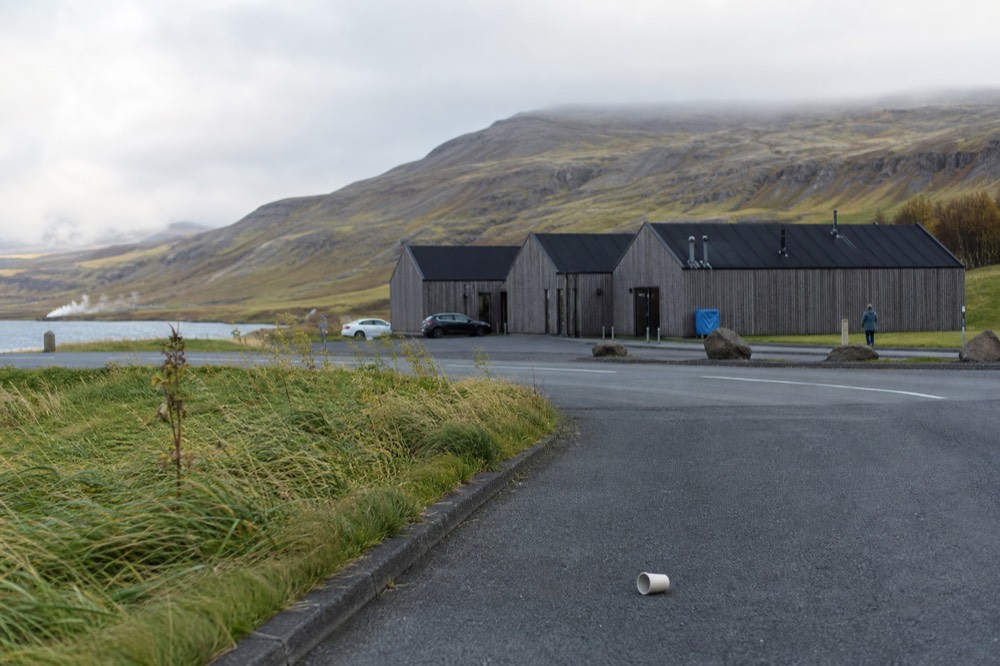
A ticketed lagoon gives you measured water, staff on site, published rules and a changing facility, which is why every serious safety conversation about Icelandic bathing ends with the same advice: soak in the supervised water, admire the wild water from a distance. Blue Lagoon states there are lifeguards on duty at all times and asks non-swimmers to identify themselves to staff. Sky Lagoon publishes its water temperature, 38-40°C, alongside its cold plunge and sauna. Hvammsvík requires guests to be 10 or older and runs its booking system to control how many people are in the springs at once.
The contrast with natural water is the whole point. A river hot spring in a valley has no depth marker, no temperature sign and no one watching. The pools at ticketed venues are not just warmer or cleaner; they are governed. Vök Baths states its pools reach a maximum depth of 1.2 metres and its temperature range, and it does not accept walk-ins from June through August precisely so that entry numbers stay within what the facility can supervise. Earth Lagoon Mývatn publishes a lagoon depth of 1.3 metres at its deepest point and provides a wheelchair for the route from shower to lagoon.
The rules at these venues are not bureaucracy. They are the safety system. The mandatory naked shower, which many first-time visitors find awkward, exists because the water in several lagoons is chlorine-free and kept clean by continuous flow rather than chemicals; the regulation behind it dates to 2010. Jewellery advisories exist because sulphur-rich water tarnishes silver and copper. Blue Lagoon's advice to work conditioner into your hair before entering exists because silica makes hair temporarily stiff. Every rule has a physical reason, and the venues publish them in their FAQs.
For travellers who want the geothermal experience with the safety scaffolding intact, the choice is wide. The guide to lagoons within reach of Reykjavík covers the capital-area options, and the rules themselves are laid out in the piece on Icelandic hot spring etiquette.
| Supervised ticketed water | Unsupervised natural water | |
|---|---|---|
| Temperature | Published per pool by the venue | Unknown, can be scalding |
| Depth | Stated by the venue where applicable | Unmarked |
| Supervision | Staff and, at some venues, lifeguards | None |
| Changing and showering | Facilities on site, shower mandatory | None |
| Access control | Timed tickets, capacity limits | Anyone can walk in |
Which Venues Publish Their Own Safety Rules?
Most ticketed lagoons, including popular bathing spots, publish their own safety and health rules directly on their websites or in their booking FAQs. Reading these before you book usually answers the questions travellers ask on the day, covering everything from age minimums and child supervision to shower requirements and how bookings work. The table below collects the headline rules from the venues' own pages, and it is worth checking the venue's site before any visit, because policies do change.
| Venue | Published rule |
|---|---|
| Blue Lagoon | Lifeguards on duty at all times; non-swimmers should tell staff; minimum age 2 |
| Sky Lagoon | No children under 12; youth 12-14 need a guardian aged 18 or older |
| Hvammsvík | Guests must be 10 or older; advance online booking with card required |
| Vök Baths | Under-16s must be accompanied by parents; walk-ins not accepted June to August |
| Forest Lagoon | Children up to 16 need a guardian; recommended maximum stay of two hours |
| Earth Lagoon Mývatn | Thorough shower required; free entry for children 5 and under with an adult |
Two patterns run through that list. The first is age minimums, which vary a great deal between venues and catch out families who assume one rule fits all. The second is booking: several venues either require or strongly recommend advance booking, and the reason is capacity control, which is a safety measure as much as a commercial one.
The budget end of the roster is not exempt from any of this, and in fact the cheapest ticket on the site is also one of the most tightly run. Secret Lagoon at Flúðir, from $35, replaces its entire pool volume every 24 hours through continuous flow, caps children at three per accompanying parent, and asks visitors to pre-book because it cannot guarantee a spot otherwise. Cheap and supervised is not a contradiction in Iceland; it is the norm outside the capital-area flagship venues.
What About The Volcano On Reykjanes?
Blue Lagoon sits beside an active volcanic system that has erupted nine times since December 2023, and the Icelandic Meteorological Office says the warning time before previous eruptions ranged from about 20 minutes to just over four hours, so the honest position is to check the official sources close to your date. The venue itself states it is open every day of the year, and the Met Office's most recent assessment describes slow, steady land uplift with low seismic activity, but nobody can promise the situation a month ahead.
The practical protocol is short. Check the Met Office's hazard assessment, check safetravel.is, and check the venue's own site before travelling to Grindavík. The full picture, including what the official sources do and do not say, is in the site's dedicated coverage of the Blue Lagoon and the volcano. Business Iceland's own framing of the Reykjanes eruptions is that they are small, effusive events whose impact is usually localized and rarely disrupts air travel, which is a fair summary of the risk as the official sources present it.
Common Questions About Safety In Iceland
What To Be Careful Of In Iceland?
The four hazards worth planning around are scalding ground at unmarked natural springs, sneaker waves on black sand beaches, wind strong enough to damage car doors, and mountain roads that open late. Each is covered by an official source: safetravel.is, Business Iceland, the road administration and the Met Office.
Is the black sand beach dangerous?
It can be. Sneaker waves surge with no warning and can sweep an adult out to sea in seconds. The official fatality record and the warning-light system attach to Reynisfjara, Kirkjufellsfjara and Djúpalónssandur specifically, but the general rules, staying back from the water and never turning your back on the sea, apply on any black beach.
Can you get burned at a natural hot spring in Iceland?
Yes. Geothermal water can sit at or near boiling point, and the ground around springs can be thin and unstable. Business Iceland names unstable ground at hot springs as a life-threatening hazard. Stick to ticketed venues, which publish their water temperatures and supervise the water.
What is the emergency number in Iceland?
112. If the call will not connect or the audio breaks up, safetravel.is publishes a backup number, 599-0112. Note that Icelandic networks no longer run 2G or 3G, so very old phones may have limited connectivity.
Do I need to worry about wind when renting a car?
Yes. Gusts strong enough to wrench a car door past its stops are common, and gravel roads add paint and windscreen damage. Hold every door against the wind, check the road administration's live map before long drives, and expect sheep on the road.
Is it safe to visit the Blue Lagoon with the volcano nearby?
Blue Lagoon states it is open every day of the year, and the Met Office currently reports slow uplift with low seismic activity. But warning times before previous eruptions were as short as 20 minutes, so check the Met Office, safetravel.is and bluelagoon.com close to your visit date.