Is It Difficult For Americans To Drive In Iceland?
An honest look at what Americans find hard about driving in Iceland: gravel, single-lane bridges, wind, F-roads and winter, tied to the lagoon drives people actually make.
Is It Difficult For Americans To Drive In Iceland?
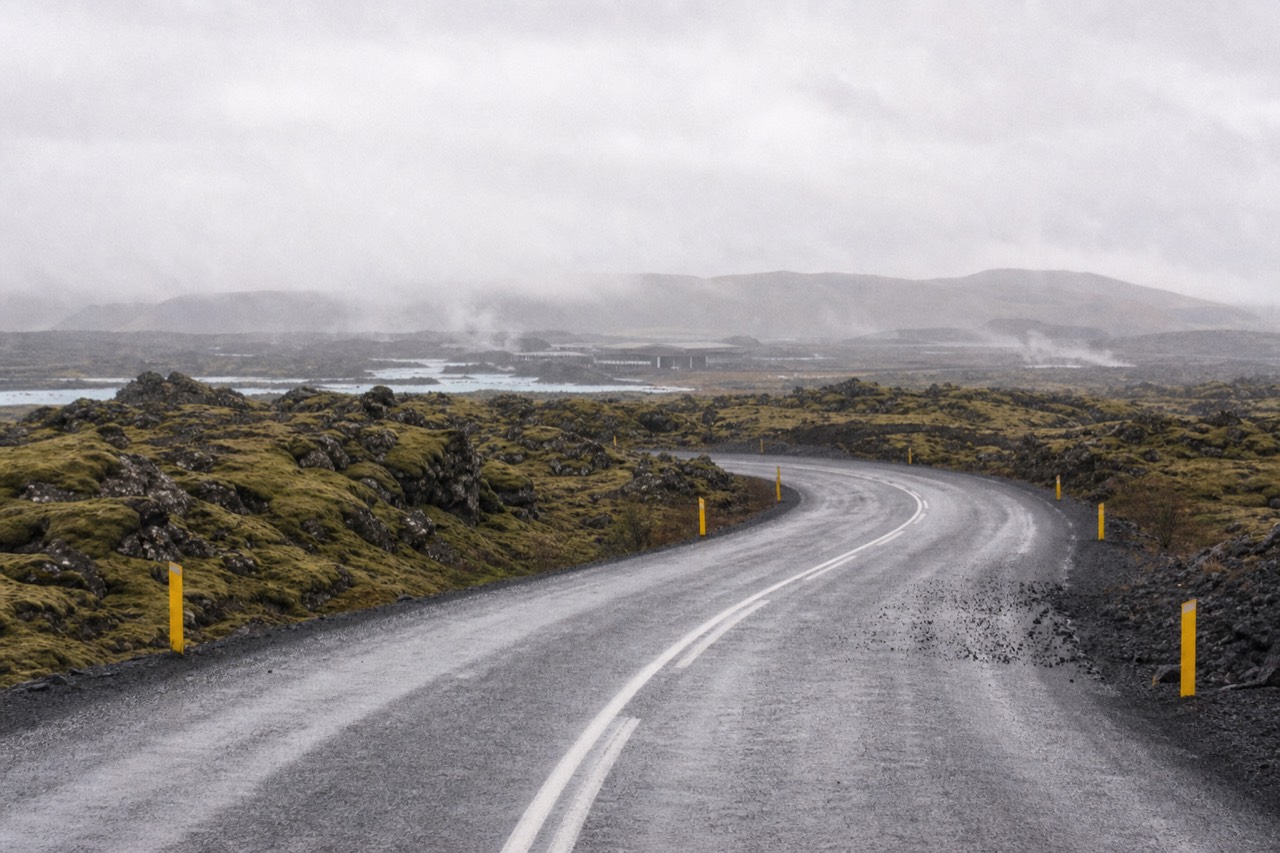
No, but it is different in ways that catch Americans off guard. The roads are narrower than US highways, many routes turn to gravel, single-lane bridges are common on the south coast, and wind damages more rental cars than collisions do. Drivers who slow down, check the official road authority daily and skip the mountain roads in a small car manage fine.
The honest answer depends on where you are going. A visitor landing at Keflavík and driving the paved highway to Reykjavík faces a road that would feel unremarkable in the American Midwest, apart from the weather. A visitor aiming for a highland lagoon faces river crossings, gravel and rules about vehicle type that rental companies enforce with real penalties. Most trips to Iceland's famous lagoons sit somewhere between those two extremes, and this article walks through each of them.
Americans also arrive with habits that need adjusting. In the US, a paved two-lane road usually stays paved and stays two lanes. In Iceland, a perfectly good paved road can narrow to a single lane over a bridge, drop to gravel without much warning, or close for the season entirely. The Icelandic Road and Coastal Administration, Vegagerðin, publishes a live map of road conditions and a seasonal page showing estimated opening dates for mountain roads, and checking it becomes part of the daily routine for anyone driving beyond the capital area.
The stakes are real for this site's readers specifically. Almost every geothermal lagoon worth visiting sits on a road you have to drive, or at least ride along: the fjord road to the tidal pools at Hvammsvík, the long ring-road haul to Mývatn, the mountain route to the Highland Baths at Kerlingarfjöll. Confidence behind the wheel is what unlocks the regional lagoons, so it is worth understanding the roads before you book the soak.
What Actually Feels Different About Icelandic Roads?
Four things: gravel surfaces, single-lane bridges, wind that rips car doors open, and animals on the road. None of these exist at this density on typical American routes, and all four cause more incidents than any lack of driving skill. The roads themselves are well engineered; the conditions around them are what demand attention.
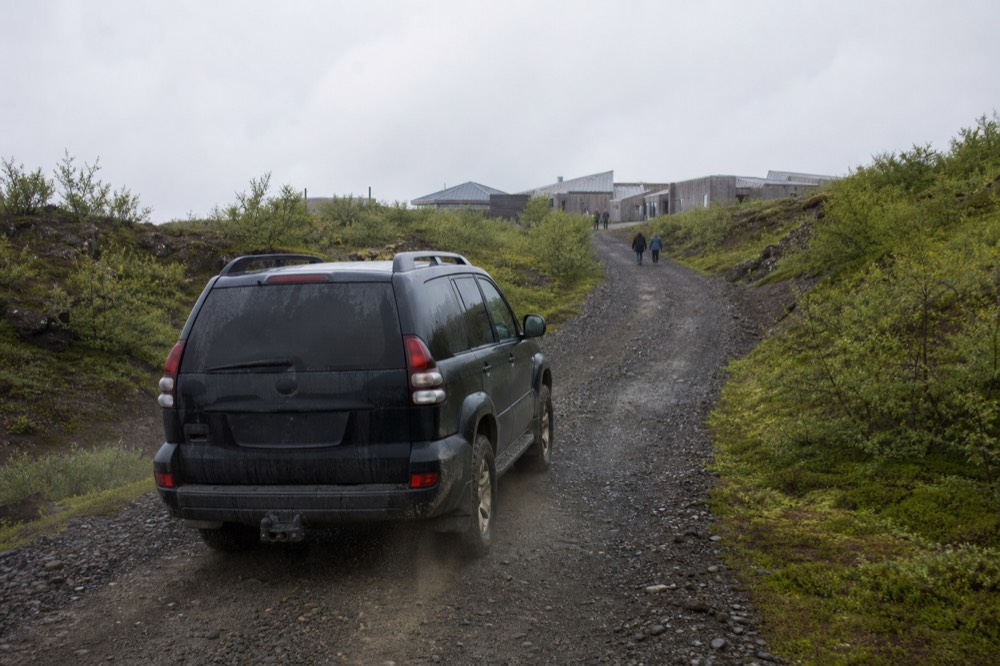
Gravel is the first surprise. Many scenic routes, including sections that lead toward lagoons and hot springs, are surfaced in loose gravel rather than asphalt. Gravel means longer braking distances, stone chips on the windshield and rental agreements that treat gravel damage differently from regular damage. Americans used to cruise control at 70 mph need to drop to a crawl on these surfaces, especially after rain when the surface becomes greasy.
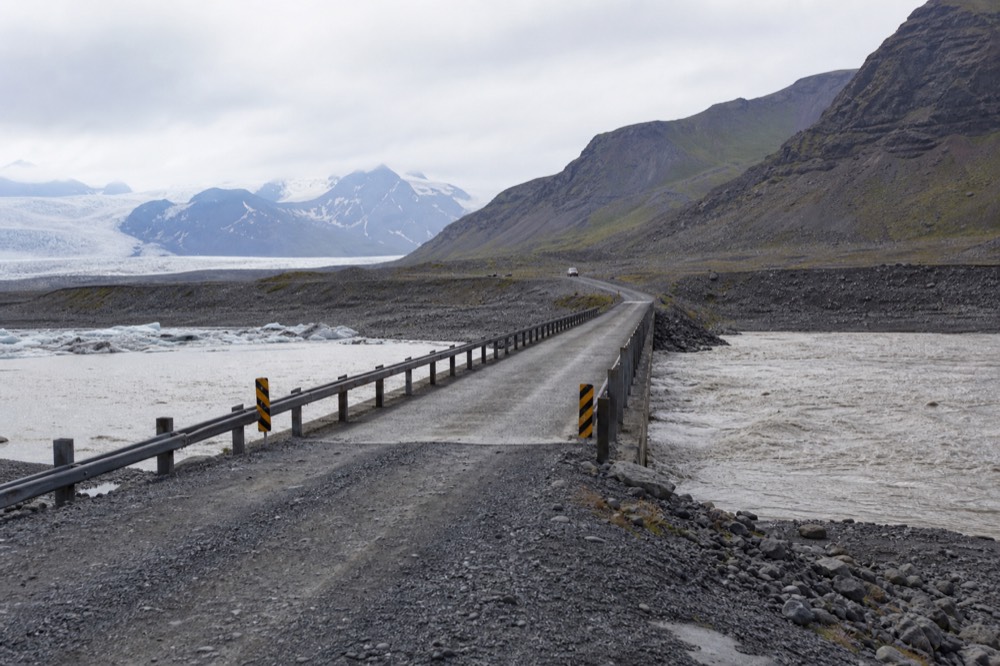
Single-lane bridges are mostly a south coast phenomenon, and they appear on the route toward the glacier lagoons. The rule is simple: the car closer to the bridge has priority, but the practical advice is to slow down well before you reach it and expect the unexpected. Business Iceland's own driving guidance notes that traffic in Iceland can include animals, especially sheep, and a sheep standing in the middle of a mountain road is a routine event rather than an oddity.
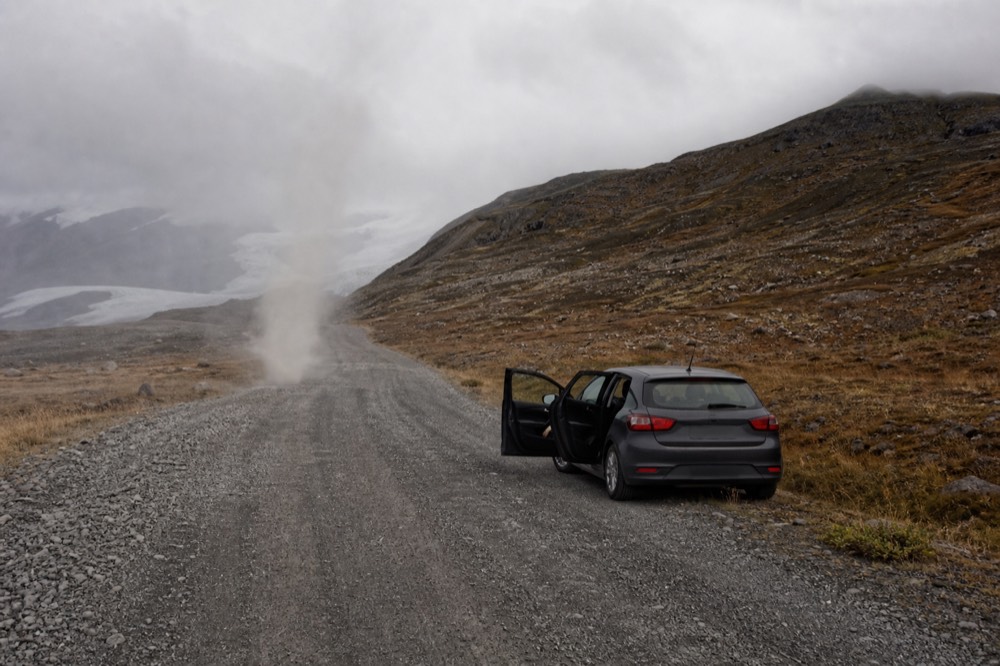
Wind is the one that costs Americans the most money. Gusts on open stretches of coast and moorland can tear a car door out of your hand as you open it, and rental companies charge for the resulting bent hinges. The standard local technique is to open the door slowly with both hands, or to brace it against your body as you get out. Park facing into the wind where you can, and if the forecast shows a serious storm, the honest answer is to not drive at all that day. The safetravel.is site, run by the Icelandic Association for Search and Rescue, publishes weather and travel condition alerts that are worth checking every morning of a driving trip.
One more habit worth borrowing from locals: the emergency number is 112, and safetravel.is currently advises saving 599-0112 as a backup number in case a call to 112 has poor audio or drops. That is a small detail that a US driver would never think to check, and it takes ten seconds to do before the trip.
Do You Even Need A Car To Reach The Lagoons?
Sometimes no. Blue Lagoon names an official transport partner with round-trip coach connections, Sky Lagoon sells admission with a transfer, and Forest Lagoon runs a free shuttle from Akureyri. But most regional lagoons, including Hvammsvík, Krauma and everything in North and East Iceland, realistically require a rental car or a seat on a guided day tour.
This is the decision that shapes the whole trip. A traveller whose lagoon ambitions stop at Blue Lagoon and Sky Lagoon can skip driving entirely and use airport coaches and city buses; Flybus, the official airport transfer, runs the Keflavík to Reykjavík route in a published 45 minutes. A traveller who wants the northern or eastern lagoons is signing up for multi-hour drives, and that is where the difficulty question really gets answered.
The table below sorts the major lagoons by what the drive demands. Distances shown are the venues' own published figures.
| Lagoon | Road type | Reachable year round | Own or named transport |
|---|---|---|---|
| Blue Lagoon, Grindavík | Paved (Route 43) | Yes, venue opens daily | Official coach partner from Reykjavík and Keflavík |
| Sky Lagoon, Kópavogur | Paved, edge of Reykjavík | Yes | Transfer add-on, partner-operated |
| Secret Lagoon, Flúðir | Paved (Route 30 area) | Yes | None published |
| Fontana, Laugarvatn | Paved (Route 37) | Yes | None published |
| Hvammsvík, Hvalfjörður | Paved then gravel entrance road (Route 47) | Yes | Partner buses, taxis, scheduled tours |
| Krauma, Reykholt | Paved (Route 50) | Yes | None published |
| Earth Lagoon Mývatn | Paved, right on the ring road | Yes | None published |
| Forest Lagoon, Akureyri | Paved | Yes | Free shuttle from Akureyri centre and harbour |
| GeoSea, Húsavík | Paved | Yes | Named local shuttles and scheduled buses |
| Vök Baths, Egilsstaðir | Paved, 500 m off Route 1 | Yes | Named local taxi operators |
| Highland Baths, Kerlingarfjöll | F-road access | No, summer season only | None published |
The pattern is clear. Every ticketed geothermal lagoon except the Highland Baths sits on a paved road, and the gravel exposure on most routes is limited to short access stretches, like the entrance track Hvammsvík describes on its own directions page. The Highland Baths are the exception that proves the F-road rule, and they are covered below. For a deeper look at the venue in Hvalfjörður, our Hvammsvík Hot Springs guide covers the tiers and the tidal pools in detail.
What Are F-Roads, And Can Americans Drive Them?
An F-road is a numbered Icelandic mountain road, open only in summer, that legally requires a four-wheel-drive vehicle and often involves unbridged river crossings. Rental agreements forbid taking a standard car on them, and insurance typically does not cover water damage from fording. The Highland Baths at Kerlingarfjöll are the main lagoon behind an F-road.
The F stands for "fjallvegur", mountain road, and the number tells you the regime: F35 to Kerlingarfjöll, for example. These roads are not maintained to the same standard as the lowland network, they may include stretches with no bridges over glacial rivers, and they open only after the spring thaw. Vegagerðin, the road authority, is explicit that opening depends on weather and snowpack, and it publishes estimated opening dates for the main mountain roads on its own seasonal mountain roads page. Rather than trusting any date you read on a travel blog, check that page directly before planning a highland trip.
For Americans, the practical translation is this: if your itinerary includes the Highland Baths, you need a proper 4x4 rental, you need to be comfortable with gravel and possibly rivers, and you need to accept that the venue's season, 15 June to 30 September, is tied to that road access. If none of that appeals, every other lagoon in this site's roster is reachable on pavement, and several of them are reachable without driving at all.
How Hard Is The Ring Road Drive To The Northern Lagoons?
Manageable in summer, demanding in winter. Earth Lagoon Mývatn publishes its location as 473 km from Reykjavík, right beside Route 1, about an hour from Akureyri and two from Egilsstaðir. The whole route is paved, but winter brings snow, ice and short daylight, and the northeast gets the worst of it.
The ring road, Route 1, is the spine of Icelandic travel and it is paved for essentially its entire loop. That reassures a lot of American drivers, and rightly so: this is not off-roading. The difficulty is distance and conditions rather than surface. The drive from the capital to Mývatn is a full day with stops, and the venue's own directions note that it sits directly on the ring road, which removes the last-mile anxiety that gravel access roads create elsewhere. Everything else covered here is indexed on Lagoons in Iceland.
What changes the calculation is the season. In summer, the drive is long but straightforward, with long daylight hours and services along the way. In winter, the same road can carry snow, black ice and drifting, and the Icelandic Met Office's weather and aurora forecasts become as much a part of trip planning as the map. The general safety advice from Business Iceland is to pay special attention to road surface, weather and traffic, and that advice is aimed at exactly this kind of drive.
The reward at the end of the northern drive is considerable. Earth Lagoon Mývatn reopened on 27 July 2026 with expanded facilities, three admission tiers and a new steam cave, and its day pass is bookable from $64. For the full picture of the venue, including the water source and the tiers, see our Earth Lagoon Mývatn guide.
What About The Shorter Drives From Reykjavík?
The capital-area and Golden Circle lagoons involve the easiest driving in the country. Krauma publishes its location as 97 km from Reykjavík on Route 50, Fontana 77 km on Route 37, and Hvammsvík describes itself as about a 45-minute drive from the city on Route 47. All are paved, though Hvammsvík's entrance is a gravel track.
These are the drives where an American driver can relax a little. The roads out of Reykjavík toward the Golden Circle and the west are well-surfaced, well-signed and familiar in scale to anyone who has driven rural US routes. The main adjustments remain the same ones from earlier: wind when you open the door, the occasional single-lane stretch, and sheep near farmland.
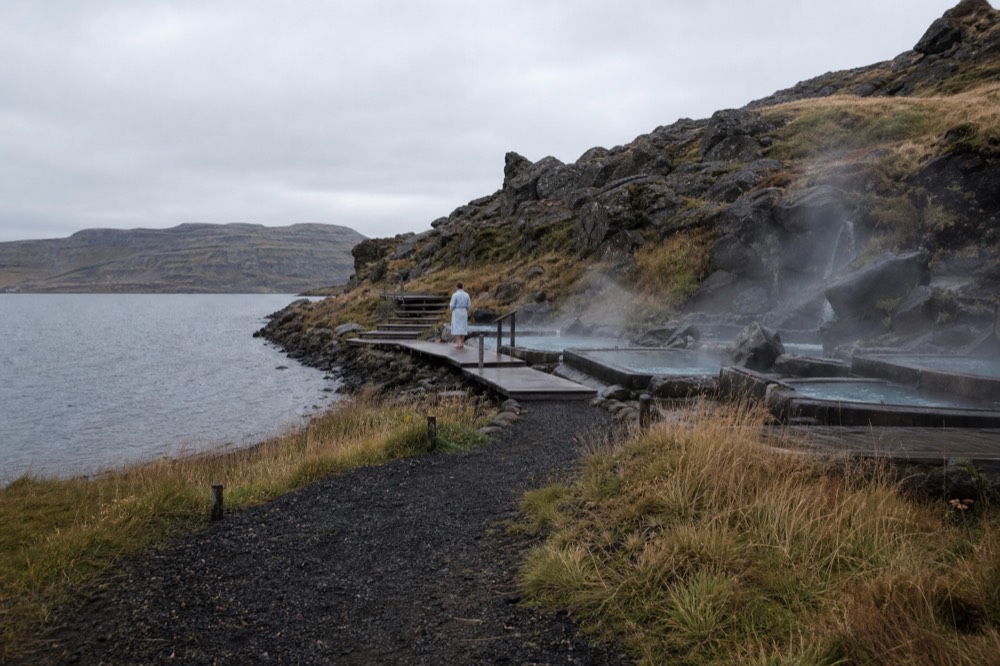
Hvammsvík deserves a specific note because its setting is unusual. The venue sits on Route 47 in Hvalfjörður, the long fjord north of Reykjavík, and it describes its own entrance as a typical Icelandic gravel road once you pass the gate. The reward for that short stretch is eight natural hot springs of different temperatures, a tidal pool that changes with the ocean, and a new Finnish sauna and cold plunge added for the current season. Guests must be 10 or older, and the venue requires advance online booking with a card.
For a wider look at the mistakes travellers make on Icelandic roads and beyond, our piece on what to be careful of in Iceland covers the same ground from a safety angle.
Is Winter Driving In Iceland A Different Skill?
Yes. Winter driving in Iceland means studded or winter tyres, snow and ice on paved roads, sudden closures of mountain routes, and very few daylight hours. The ring road stays open in principle all year, but passes in the north and east can close during storms, and Americans without snow-driving experience should build slack into every itinerary.
The single biggest difference from a US winter road trip is that Icelandic weather changes the plan, not just the pace. A drive that takes an afternoon in July can be impossible in January, and the road authority closes sections of Route 1 when conditions demand it. Vegagerðin's live condition map and its traffic service number, 1777, exist precisely because a road that was fine at breakfast can be shut by lunch. Americans from snowy states will recognise the techniques; Americans from Texas or Florida should honestly consider guided tours for winter lagoon trips, or stick to the capital area venues.
There is also the daylight question. This site will not publish month-by-month daylight figures because no official meteorological figures were retrieved in our research pass, but the general pattern is well known: winter days are short, which compresses driving windows and makes the free ranger walks and long boat tours of summer unavailable. The northern lights season, September to April per Business Iceland, partly compensates, and the Met Office's aurora forecast page with its cloud overlay is the standard tool for planning an evening around it. The official position is that there are no guarantees of seeing them.
Does The Volcano Near Blue Lagoon Affect Driving?
It can, at short notice. The Icelandic Meteorological Office says warning times before previous eruptions on the Sundhnúkur crater row ranged from about 20 minutes to just over four hours, and its current assessment, valid until 30 September 2026, notes magma continues to accumulate beneath Svartsengi. Blue Lagoon itself states it is open every day of the year, with no closure notice on its site.
For an American driver, the practical takeaway is not to avoid the Reykjanes Peninsula but to stay informed while you are on it. The road to Blue Lagoon, Route 43, is paved and straightforward, and the venue directs drivers to follow road signs rather than navigation apps that may show outdated routes. The volcanic system nearby has erupted repeatedly since December 2023, and the Met Office's most recent update describes slow but steady land uplift with low seismic activity, the kind of quiet that can still change quickly.
The right routine is the same one that covers every other Icelandic driving risk: check safetravel.is and the venue's own site close to your date. Business Iceland characterises the Reykjanes eruptions as small, effusive events whose impact is usually localized, and air travel is rarely disrupted, but a road closure or an evacuation order near Grindavík is exactly the kind of thing that would reshape a day's driving. For more on the current situation, our article is the Blue Lagoon safe from the volcano goes deeper than a driving piece needs to.
Common Questions About Americans Driving In Iceland
Is It Difficult For Americans To Drive In Iceland?
Not especially, but it is different. Roads are narrower, gravel is common, single-lane bridges appear on the south coast, and wind damages more rental cars than accidents do. Every major geothermal lagoon except the Highland Baths at Kerlingarfjöll sits on a paved road. Americans who check the road authority's live map daily and avoid F-roads without a 4x4 generally report that driving in Iceland is manageable.
Do I need a four-wheel-drive vehicle in Iceland?
Only if you plan to drive F-roads, the numbered mountain routes that legally require four-wheel-drive. For the ring road and every geothermal lagoon except the Highland Baths at Kerlingarfjöll, a standard car is sufficient, though a slightly larger vehicle copes better with wind. The Highland Baths are reachable only via F-road access and run a summer season from 15 June to 30 September.
What is the biggest driving mistake Americans make in Iceland?
Opening the car door without bracing against the wind. Gusts strong enough to tear a door out of a driver's hand are routine on open coastal and moorland stretches, and rental companies charge for the bent hinges. The local technique is to open the door slowly with both hands. The second biggest mistake is trusting a fixed opening date for mountain roads instead of checking the road authority's own seasonal page.
Can you reach the lagoons without driving?
Some of them. Blue Lagoon names an official transport partner with round-trip coach connections from Reykjavík and Keflavík, Sky Lagoon sells admission bundled with a transfer, and Forest Lagoon runs a free shuttle from Akureyri city centre and cruise harbour. Most regional lagoons, including Hvammsvík, Krauma and the northern and eastern venues, realistically need a rental car or a guided day tour.
Is the ring road open in winter?
Route 1 is maintained year round in principle, but sections in the north and east close during storms, sometimes for hours, sometimes longer. Winter driving involves snow and ice on paved surfaces and very limited daylight. The road authority publishes live conditions on its map and runs a traffic information line at 1777, and checking both before setting out is the standard local routine in winter.
Does the volcano near Blue Lagoon close the roads?
It has in the past, at short notice. The Icelandic Meteorological Office says warning times before previous eruptions on the Sundhnúkur crater row ranged from about 20 minutes to just over four hours, and its current assessment notes magma continues to accumulate beneath Svartsengi. Blue Lagoon states it is open every day of the year. Anyone driving on Reykjanes should check safetravel.is and the venue's own site close to their date.
Driving in Iceland is less a test of skill than a test of attention, and Americans who give it that attention unlock the whole country: the tidal pools of Hvalfjörður, the steam of Mývatn, the quiet baths of the west. The roads are not the obstacle. Treating them casually is.