Is The Blue Lagoon Safe From The Volcano?
What the Icelandic Met Office, safetravel.is and Blue Lagoon itself actually publish about volcanic risk on the Reykjanes Peninsula, and what it means for your booking.
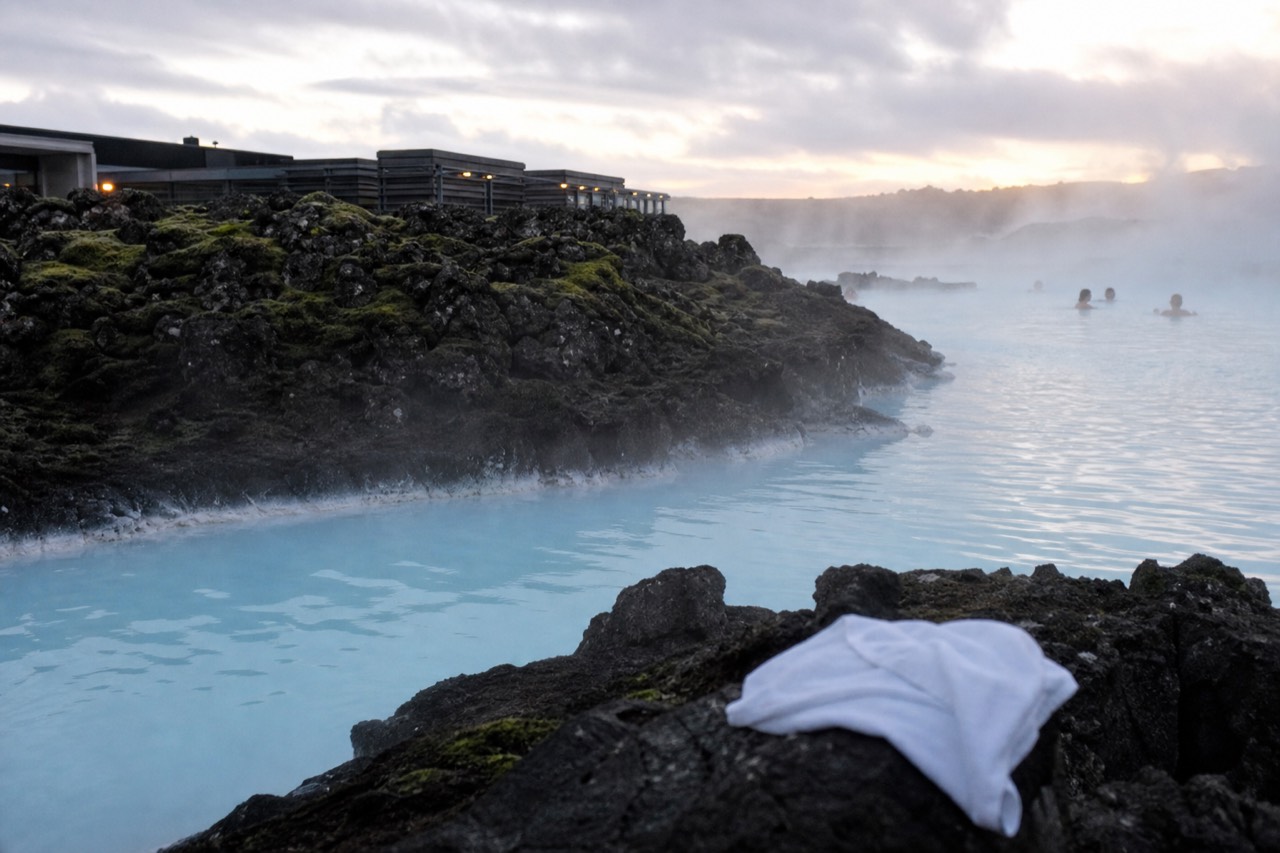
The Reykjanes Peninsula is one of the most closely watched volcanic areas on earth, and the Blue Lagoon sits beside it. That sentence alone explains why the question gets asked so often, and why the honest answer has to come from the monitoring bodies rather than from a travel writer's reassurance. This page gathers what the Icelandic Meteorological Office, the Icelandic Association for Search and Rescue, the official travel guide and the venue itself actually publish, and separates what is known from what nobody can promise.
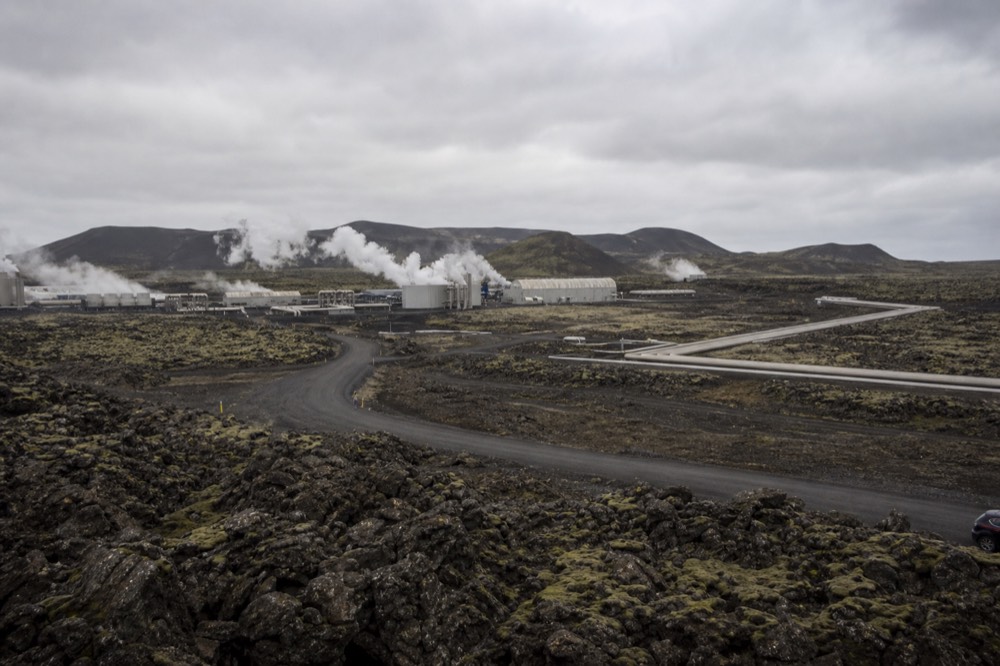
Is The Blue Lagoon Safe From The Volcano?
No source we can cite states that the Blue Lagoon is safe, and none states that it is unsafe. What the record supports is this: the lagoon is open and says it opens every day of the year, the volcanic system beside it has erupted nine times since December 2023, and the venue has closed at short notice during that series. The decision that follows is yours, and it should be made on official, current information.
That answer is deliberately narrow, and it is the only one the evidence supports. The Icelandic Meteorological Office (IMO) is the body that monitors the Svartsengi and Sundhnúkur volcanic system, and its updates are the authoritative source on what the ground is doing. The venue publishes its own operational status. Safetravel.is, run by the Icelandic Association for Search and Rescue, aggregates conditions and alerts for travellers. None of these bodies issues a blanket safety guarantee for a commercial venue, and a page that offered one would be inventing it.
What can be said plainly is the pattern. Business Iceland, the official travel guide, records that the region near Grindavík has experienced nine fissure eruptions since December 2023, with the most recent beginning on 16 July 2025 and ending on 5 August 2025. It also describes the Reykjanes eruptions as small, effusive events with flowing lava, whose impact is usually localized and rarely disrupts air travel. The peninsula sits about 35 km from Reykjavík, which is why the capital region has carried on largely unaffected while the immediate eruption zone has seen repeated disruption.
If you are weighing a booking right now, these are the three tickets travellers most often compare when the volcanic question is live:
The rest of this page walks through the eruption record, the monitoring arrangements, what the venue itself does, and which lagoons sit well outside the affected peninsula entirely. It is the question this site, Lagoons in Iceland, was built to answer with sources rather than reassurance.
What Has Actually Happened On The Reykjanes Peninsula Since 2023?
Nine fissure eruptions have struck the Sundhnúkur crater row near Grindavík since December 2023, the most recent running from 16 July to 5 August 2025 according to the Icelandic Meteorological Office's news record. Each was a localized, effusive event rather than an explosive one, and the official travel guide notes their impact is usually localized and rarely disrupts air travel.
The Met Office's news index is the record this site treats as authoritative, and it is worth explaining why. Business Iceland's own eruption page carries two different dates for the most recent eruption in the same document: its introduction references a November 2024 event, while its body text says the most recent eruption began on 16 July and ended on 5 August 2025. The Met Office's news record supports the July and August 2025 dates, with an item posted on 16 July 2025 titled "Eruption ongoing on the Sundhnúkur crater row" and a follow-up on 5 August 2025 announcing that the ninth eruption had ended. When an official tourism page contradicts itself, the monitoring body's own record is the one to prefer.
Business Iceland also frames the wider picture: Iceland used to see an eruption roughly every five years, but activity has surged since 2021 and centred on the Reykjanes Peninsula. That is the context for everything else on this page. The Blue Lagoon formed in the 1970s, in the venue's own account, when excess water from the nearby Svartsengi geothermal power plant collected on the lava field instead of draining through it. The power plant, the lagoon and the town of Grindavík all sit within the same active volcanic system's footprint, which is exactly why the monitoring is so intensive.
What the record does not support is a list of specific closure dates, a count of days the venue lost, or a claim about how close lava came to any building. Those figures circulate online, but none of them could be confirmed from a primary source in this site's research pass, so they do not appear here. The honest summary is simpler: the venue has closed at short notice during the eruption series, and it has reopened. Anyone booking should plan around that possibility rather than around a fixed narrative of either constant danger or total immunity.
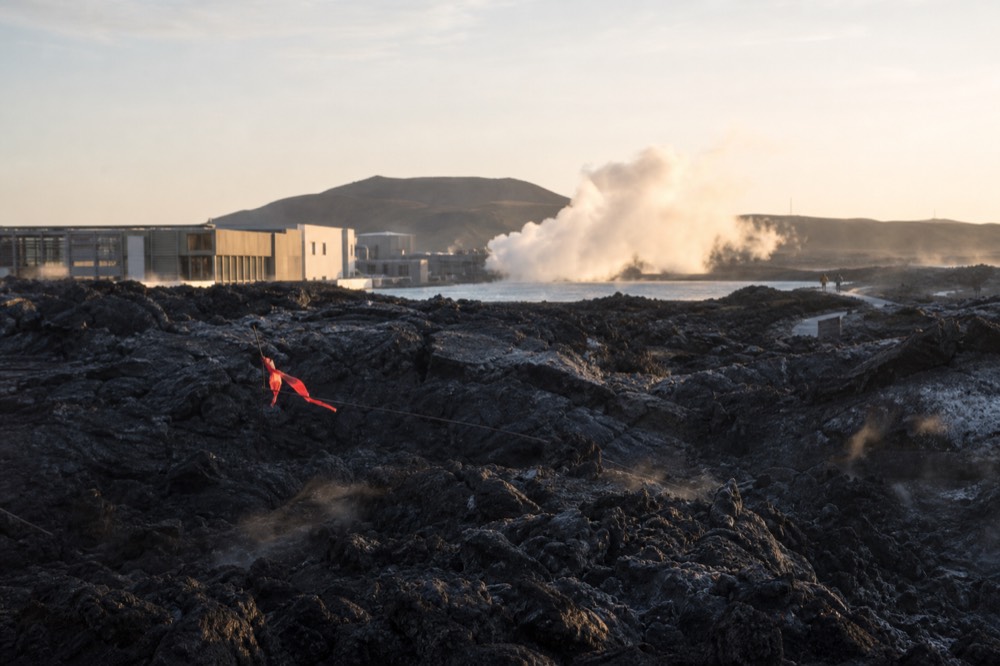
Which Official Body Publishes What, And Where Should You Check?
The Icelandic Meteorological Office publishes the volcanic hazard assessment and the seismic record, safetravel.is carries traveller-facing alerts, Blue Lagoon publishes its own operational status, and Business Iceland provides the general travel context. Each controls a different piece of the picture, and no single one of them answers the whole safety question on its own.
The table below sets out who publishes what, so you know where each kind of answer lives. The Met Office's updates are the ones that describe ground deformation, magma accumulation and the hazard assessment's validity period. Safetravel.is translates conditions into practical traveller advice and runs a free SMS service. The venue's own pages are the only place a closure or reopening notice will appear first.
| Source | What it publishes | Where to check |
|---|---|---|
| Icelandic Meteorological Office | Ground uplift and magma accumulation updates, seismic activity, the hazard assessment and its validity period, eruption news record | en.vedur.is news index |
| Safetravel.is (ICE-SAR) | Traveller alerts, conditions map, free SMS service, the 112 emergency number and its backup 599-0112 | safetravel.is |
| Blue Lagoon | Opening hours, operational status, and its own seismic-activity information page | bluelagoon.com/seismic-activity |
| Business Iceland (Visit Iceland) | General eruption context, driving and beach safety guidance | visiticeland.com/eruption |
A note on how to read the Met Office's language, because it is precise and easy to over-interpret. Its update of 18 August 2026 states that land uplift at Svartsengi continues at a slow but steady rate, that seismic activity remains low, and that approximately 29.1 million cubic metres of magma have accumulated beneath Svartsengi since the beginning of the last eruption in July 2025, with an uncertainty range of 28.3 to 29.9 million cubic metres. The same update says the most likely scenario is a magma intrusion propagating from Svartsengi into the Sundhnúkur crater row, which could lead to an eruption, and that the hazard assessment remained unchanged and was valid until 30 September 2026. None of that is a prediction of an eruption on a date, and it should not be read as one.
If a booking decision is hanging on this question, the practical routine is short: check the Met Office's latest update, check the venue's own pages, and sign up for the safetravel.is SMS service before you travel. That routine, done close to your date, is worth more than any article written weeks earlier, including this one. For the questions of availability, rebooking and what a ticket actually includes, our Blue Lagoon tickets and packages guide covers those in detail.
What Does Blue Lagoon Itself Say And Do?
Blue Lagoon states it is open every day of the year, with no closure notice on its opening-hours page, and it maintains a dedicated seismic-activity page describing protective barriers built at Svartsengi to safeguard infrastructure against potential lava flows. It also states that monitoring is conducted primarily by the Icelandic Meteorological Office.
The venue's own position is the most direct evidence of its current operational state. Its opening-hours page reads, in its own words, "We are open every day of the year", and its plan-your-visit pages repeat that opening hours change with the seasons across 365 days. On the retrieval date for this site's research, no status banner, closure notice or volcanic alert appeared anywhere on those pages. Seasonal hours are published in blocks, including summer hours of 07:00 to 23:00 from 15 June to 20 August, and guests are asked to exit the water 30 minutes before closure.
The seismic-activity page is the more interesting document, because it is the venue explaining its own exposure. Blue Lagoon says it has constructed specialized protective barriers at Svartsengi to safeguard infrastructure against potential lava flows, and that monitoring is conducted primarily by the Icelandic Meteorological Office. That is the venue's own account of its arrangements, and it is the closest thing to an official answer on what physical measures exist. The lagoon also sits inside the Reykjanes UNESCO Global Geopark, in the venue's own description of its setting.
What this site will not do is translate any of that into a verdict. The venue being open today does not mean it will be open on your date, and the barriers being built does not mean an eruption cannot disrupt operations. Blue Lagoon has closed at short notice during the eruption series, and the Met Office's published warning time before previous eruptions ranged from about 20 minutes to just over four hours. That warning-time range is the one forward-looking statement the Met Office publishes, and it is the reason the venue's own status page, checked close to your visit, matters more than anything else.
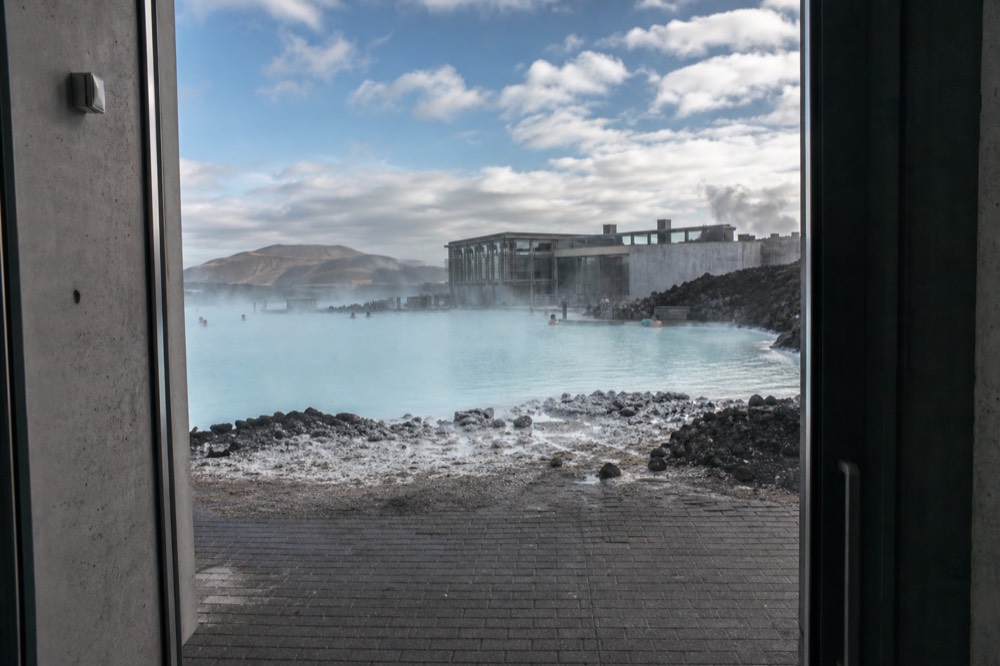
How Does An Evacuation Actually Work If An Eruption Starts?
The Icelandic Meteorological Office publishes the warning, and the warning time before previous eruptions on the Sundhnúkur crater row ranged from about 20 minutes to just over four hours, in the Met Office's own words. Civil protection authorities, not the venue and not this site, decide on evacuations and area access, and those decisions are communicated through official channels including safetravel.is.
The 20-minute-to-four-hour range deserves a moment of attention, because it reframes what "warning" means in this context. Some eruptions in the series gave hours of seismic precursor; others gave minutes. The Met Office's monitoring network is dense and the response system is rehearsed, but the published range is honest about the fact that the gap between signal and eruption can be short. That is precisely why the region is instrumented as heavily as it is, and why the hazard assessment is reissued on a defined validity cycle rather than left open-ended.
For a visitor, the practical layer sits on top of the scientific one. Safetravel.is, run by the Icelandic Association for Search and Rescue, is the channel that carries traveller-facing alerts, and Business Iceland points to it as the number one site for travel information during a trip, including its free SMS service and its conditions map. The emergency number in Iceland is 112, and safetravel.is currently notes a backup number, 599-0112, for cases where a 112 call will not connect or has poor audio. Business Iceland also flags that Icelandic networks no longer run 2G or 3G, so very old phones may have limited connectivity, which is a small detail that matters more in an emergency than in a café.
What no page can honestly give you is a step-by-step account of an evacuation that has not happened. This site will not state that the venue was evacuated on a named date, will not count houses or evacuees in Grindavík, and will not characterize the town or the site as safe or unsafe. Those claims either could not be confirmed from primary sources or belong to authorities who have not made them. If you want the current access picture for the area, the venue's own pages and safetravel.is are where it lives.
What About Lagoons Elsewhere In Iceland?
Most of the lagoons on this site's roster sit nowhere near the Reykjanes Peninsula. The volcanic activity is concentrated on that one peninsula in the southwest, and venues in West Iceland, the Golden Circle area, the north and the east are hundreds of kilometres from the affected zone, on completely different geological settings.
This is the part of the question that often gets lost. Iceland's geothermal lagoons are spread around the entire ring road, and the eruption series affects one peninsula. If the volcanic question is the thing making you hesitate, the honest answer is that a lagoon trip in Iceland does not have to involve Reykjanes at all. The table below lists roster venues by region, using the locations and ticket figures from each live listing.
| Lagoon | Region | Location | Ticket from | Rating on the listing |
|---|---|---|---|---|
| Hvammsvík Hot Springs | West Iceland | Hvalfjörður | $84 | 4.8 from 313 reviews |
| Krauma | West Iceland | Deildartunguhver | $50 | 4.6 from 219 reviews |
| Husafell Canyon Baths | West Iceland | Husafell | $76 | 4.8 from 68 reviews |
| Secret Lagoon | South / Golden Circle | Flúðir | $35 | 4.7 from 2,124 reviews |
| Fontana | South / Golden Circle | Laugarvatn | $47 | 4.2 from 167 reviews |
| Laugarás Lagoon | South / Golden Circle | Laugarás | $73 | 4.8 from 74 reviews |
| Earth Lagoon Mývatn | North Iceland | Mývatn | $64 | 4.5 from 2,225 reviews |
| Forest Lagoon | North Iceland | Akureyri | $81 | 4.7 from 666 reviews |
| GeoSea | North Iceland | Húsavík | $60 | 4.7 from 812 reviews |
| Vök Baths | East Iceland | Lake Urridavatn | $64 | 4.7 from 427 reviews |
Hvammsvík, in Hvalfjörður, is the closest of these to the capital while sitting firmly off the peninsula, about a 45-minute drive from Reykjavík on route 47 in the venue's own directions. It offers eight natural hot springs of various sizes and temperatures, a sauna, a steam room, a cold plunge and the ocean itself, and it requires guests to be 10 or older. It has also recently added a Finnish sauna and a cold plunge, and it operates cashless with advance online booking. For a traveller who wants the geothermal experience without the Reykjanes question attached, it is a straightforward swap, and our Hvammsvík Hot Springs guide covers it in full.
The Sky Lagoon deserves its own note here, because it is the one capital-area venue people sometimes lump together with Blue Lagoon. It sits in Kópavogur, at the edge of Reykjavík, roughly 45 minutes from Keflavík Airport by the venue's own published drive time. It is on the same general landmass as the peninsula but outside the immediate affected zone, and no official source applies the Sundhnúkur hazard assessment to it. Travellers who want a spa ritual near the city often compare the two venues directly, and our piece on whether Sky Lagoon is worth it covers that comparison properly.
Should You Still Book, And How Do You Decide?
Book if the information picture on your date supports it, and structure the booking so a short-notice change does not sink your plans. Check the Met Office update, the venue's status page and safetravel.is close to your date, understand the cancellation terms on the operator's live listing before paying, and consider one of the off-peninsula lagoons if the volcanic question is the deciding factor for you.
The framing that helps is to separate the two questions people usually merge. The first is whether the venue is operating, which is a factual question answered by the venue's own pages on any given day. The second is whether you are comfortable with the residual uncertainty, which is a personal question no official body answers for you. The Met Office's published position, an active system with slow steady uplift, low seismicity and accumulated magma, is not a reason to panic, but it is also not a reason to expect the question to disappear. The pattern since 2023 has been long quiet periods punctuated by short, localized eruptions.
Practical hedges exist. Booking a slot with clear cancellation terms, keeping the date flexible within your trip, and having a second lagoon in mind as a fallback all reduce the cost of a disruption. If your itinerary already runs along the south coast or into the north, the roster above gives you alternatives that are unaffected by anything happening on Reykjanes. And if the Blue Lagoon is the specific experience you came for, then the routine is the one repeated throughout this page: the Met Office, the venue's own pages, and safetravel.is, checked close to your date. For a fuller treatment of the venue's current status, see our guide to whether the Blue Lagoon is open, and for the broader value question, our review of whether the Blue Lagoon is worth it.
For quick reference, here are the three listings travellers most often weigh when the volcanic question is live:
Common Questions About Blue Lagoon Volcano Safety
Is The Blue Lagoon Safe From The Volcano?
No official source states that the venue is safe or unsafe. The venue says it is open every day of the year, the Icelandic Meteorological Office reports an active but currently quiet volcanic system beside it, and the venue has closed at short notice during the eruption series. Check the Met Office, the venue's own pages and safetravel.is close to your date.
Is the Blue Lagoon currently open?
Blue Lagoon's own opening-hours page states "We are open every day of the year" and carried no closure notice when this site's research was gathered. Status can change at short notice, so the venue's own page is the authoritative check on any given day.
How much warning is there before an eruption?
The Icelandic Meteorological Office says warning times before previous eruptions on the Sundhnúkur crater row ranged from approximately 20 minutes to just over four hours. That is the only forward-looking statement the monitoring body publishes, and it is not a prediction about any future event.
Has the Blue Lagoon been closed because of eruptions?
Yes, the venue has closed at short notice during the eruption series that began in December 2023. This site does not publish specific closure dates or durations, because none could be confirmed from primary sources. The venue's own pages carry its operational history and current status.
Which lagoons are unaffected by the Reykjanes eruptions?
All the lagoons outside the Reykjanes Peninsula: Hvammsvík, Krauma and Husafell Canyon Baths in the west, Secret Lagoon, Fontana and Laugarás on the Golden Circle route, Earth Lagoon Mývatn, Forest Lagoon and GeoSea in the north, and Vök Baths in the east. The eruption series is concentrated on one peninsula in the southwest.
Where should I check for updates before my visit?
Three places: the Icelandic Meteorological Office's news and hazard-assessment pages for the volcanic picture, bluelagoon.com for the venue's operational status, and safetravel.is for traveller alerts and its free SMS service. Checking all three close to your date covers the full picture.