Is Blue Lagoon Good For Eczema?
What Blue Lagoon actually publishes about its water, its research and its skin clinic, what is only marketing, and what nobody should promise about eczema.
Is Blue Lagoon Good For Eczema?
Blue Lagoon does not claim its water cures or treats eczema, and no honest article should make that claim either. What is real: the venue operates a dermatology clinic that opened in 1995 for chronic skin conditions, and it publishes research on the geothermal seawater's silica and algae. Whether a visit helps your skin specifically is a medical question, and the answer belongs to you and a doctor.
That opening distinction matters more here than on almost any other page about Icelandic bathing. Blue Lagoon is one of very few lagoon venues anywhere with an actual clinic attached, and it has spent decades building a skincare business on the properties of its water. That makes it easy to find articles promising that a soak will clear your skin. It also makes it easy to find the opposite, warnings that sulphur and minerals will sting broken skin. Neither extreme is supported by what the venue itself publishes.
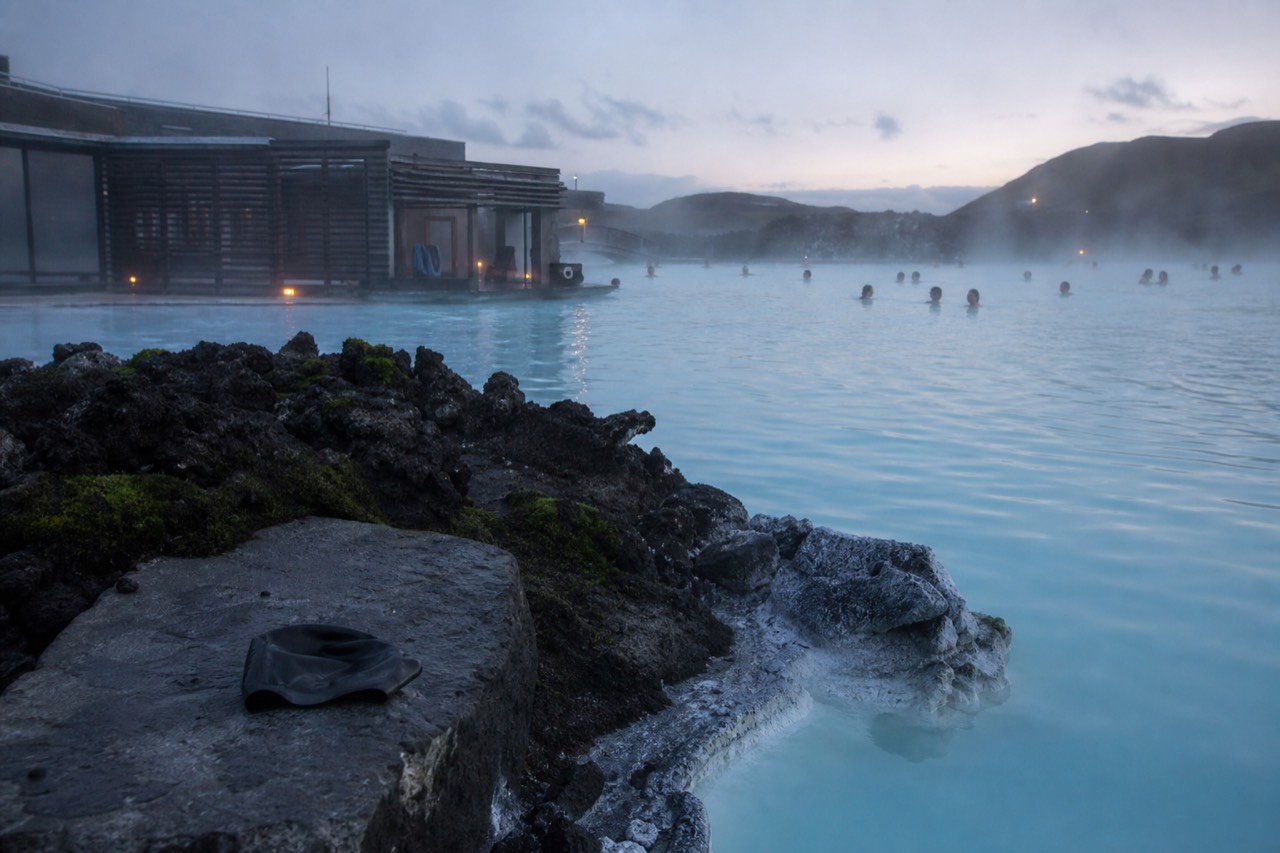
What Blue Lagoon actually says is narrower and more interesting. Its water page describes geothermal seawater drawn from two thousand metres underground, where ocean water and freshwater converge, emerging "enriched with silica, algae, and minerals". The venue says the mix is 70% ocean water and 30% freshwater, that it arrives at the lagoon at 38°C after starting at 240°C deep in the earth, and that the water's blue colour comes from how silica reflects sunlight. None of that is a medical claim. It is a description of the water, and it is the venue's own description, published on its water page.
The skin story sits on top of that. Blue Lagoon says the beneficial powers of the water were noticed in the early 1980s, when locals began bathing in the warm reservoir that had accidentally formed beside the Svartsengi power plant in the 1970s, and that a clinic for chronic skin conditions opened in 1995. An analysis the venue cites, conducted in 1996, found a novel species of blue-green algae in the lagoon, patented in 2006. Those are the facts a reader with eczema actually needs: a real clinic, real research history, and a business built on it, reported in the venue's voice rather than inflated into a promise.
If you are weighing a visit against other mineral-water lagoons in Iceland, the honest comparison is not "which one heals" but "which one publishes what, in whose voice, and what each admission actually includes".
What Blue Lagoon Publishes About Its Own Water And Research
The venue's published account has three layers: the water's composition (silica, algae, minerals, 70% ocean and 30% freshwater), a research history dating to the 1980s, and a clinic for chronic skin conditions opened in 1995. Every layer is Blue Lagoon describing itself, which is legitimate sourcing, but it is not the same as independent clinical proof that a single visit helps eczema.
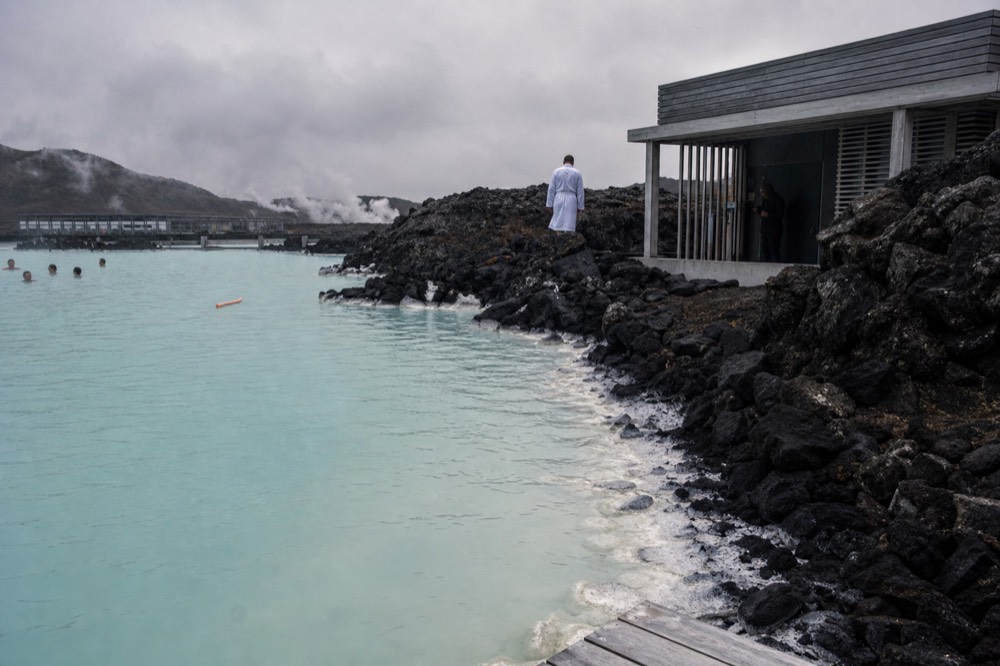
Start with the water, because everything else is built on it. Blue Lagoon's own framing is that the lagoon formed by accident in the 1970s, when water from the nearby Svartsengi geothermal power plant collected on the lava field instead of draining through it, because its high silica content kept it from seeping away. Locals began bathing in it in the early 1980s. The venue's account of that period, published in its own stories section, is that this was when the water's beneficial powers were first discovered, and that a clinic for chronic skin conditions followed in 1995. The lagoon's skincare products grew out of the same research programme, including the novel blue-green algae species identified in 1996 and patented in 2006.
The clinic is the part most visitors never see. It is a genuine dermatology operation, and it is why Blue Lagoon can speak about skin conditions with more authority than a venue that simply heats water and sells towels. But notice what even the venue does not say: it does not publish a cure rate for eczema, it does not promise that recreational bathing clears skin, and its consumer-facing pages describe the water as enriching rather than healing. When a marketing line goes further, as "healing" and "rejuvenating" wording does across the spa industry, that is the venue's advertising voice, not a finding.
For a visitor with eczema, the practical question is different from the scientific one. Is the water itself gentle? On the chemistry the venue publishes: the lagoon is not chlorinated or treated, and the geothermal seawater fully renews roughly every 40 hours. The average temperature the venue states is 37-40°C. Heat itself is a known irritant for many people with eczema, long hot soaks are a standard dermatological caution, and that applies to any hot water, geothermal or not. Blue Lagoon's own guest guidance is aimed at comfort rather than treatment: apply conditioner to your hair before entering because silica makes hair temporarily stiff, and remove jewellery because the water can tarnish it.
The one thing the venue does say plainly, and which matters for anyone with sensitive or broken skin, is that the water is mineral-rich and untreated. People whose skin reacts to sulphur, or whose eczema is currently flaring with open cracks, should treat a first visit as an experiment: keep it short, rinse afterwards, and moisturise. That is ordinary skin care, not lagoon magic, and it is the advice that holds up regardless of what any listing claims.
What Is Verified Fact And What Is Only A Venue Claim
Verified: the water's published composition, the 40-hour renewal, the clinic's 1995 opening and the 2006 algae patent, all in the venue's voice. Not verifiable: any statement that the water cures, treats or relieves eczema, psoriasis or any other condition, and any mineral concentration, pH value or silica figure in milligrams per litre, which no venue in Iceland publishes in a checkable form.
This is the table that keeps an honest page honest. Almost everything a reader will find elsewhere about Blue Lagoon and skin is either the venue describing itself, a third party repeating the venue, or an invention. Separating the layers is the whole job.
| Statement | Status | Who says it |
|---|---|---|
| The water is geothermal seawater, 70% ocean and 30% freshwater, rich in silica, algae and minerals | Published by the venue | Blue Lagoon |
| The lagoon formed by accident in the 1970s beside the Svartsengi plant | Published by the venue | Blue Lagoon |
| A clinic for chronic skin conditions opened in 1995 | Published by the venue | Blue Lagoon |
| A novel blue-green algae species was identified in 1996 and patented in 2006 | Published by the venue | Blue Lagoon |
| The water is not chlorinated and renews roughly every 40 hours | Published by the venue | Blue Lagoon |
| The water cures, treats or relieves eczema | Claimed by nobody | Not even the venue |
| Specific mineral concentrations or pH values | Not published | No venue publishes a checkable figure |
The pattern in that table repeats across Iceland. Venues describe their water in glowing terms and attach their own science to it; what none of them do is publish clinical trial results for recreational bathers with diagnosed skin conditions. A reader who understands the difference between "the venue says its water is enriching" and "soaking here will help your eczema" is immune to most of the nonsense on this topic.
The same discipline applies to the negative claims. You will also read that geothermal water will ruin a tattoo, bleach hair or damage swimsuits. Blue Lagoon's published guidance covers hair stiffness from silica and jewellery tarnish, and it recommends removing contact lenses because the seawater can irritate eyes. Nothing in the venue's own published material supports the tattoo or swimsuit claims, and this site will not restate them either way.
Which Lagoons Publish A Clinic Or Treatment Offering At All
Only Blue Lagoon, among the ticketed lagoons in Iceland, operates a dermatology clinic attached to its water. Several other venues sell massage and spa treatments, and several describe their water as mineral-rich or naturally pure, but a clinic focused on chronic skin conditions exists at exactly one venue, which is why the eczema question is really a Blue Lagoon question.
That asymmetry is worth spelling out, because search results tend to blur every geothermal pool in the country into one warm, sulphurous blur. If your interest in lagoons is skin-driven, the landscape is not flat.
| Venue | Clinic or treatment offering | What the venue says about its water |
|---|---|---|
| Blue Lagoon | Dermatology clinic, opened 1995, for chronic skin conditions | Geothermal seawater rich in silica, algae and minerals |
| Earth Lagoon Mývatn | Massages of 30-60 minutes, four types | Naturally alkaline, sulphur-rich, free of chlorine or added disinfectants |
| Krauma | Spa baths and restaurant | Water rich in iron, aluminium, calcium, magnesium and sulphur |
| Sky Lagoon | Spa ritual and treatments | Describes a geothermal lagoon at 38-40°C; its ritual text speaks of removing toxins in the venue's voice |
| Secret Lagoon | Bathing only | Water flows continuously, fully replaced in 24 hours, sulphur-rich, 38-40°C |
The treatment column is where the eczema question lives. Massage is a spa service; a dermatology clinic is a medical facility. Blue Lagoon has the second thing, and the others do not, which does not make their water worse, only their claims differently positioned. Krauma's water comes from Deildartunguhver, which Krauma itself describes as having the highest flow rate of hot springs in Europe at 180 litres of 100°C water per second, cooled with glacier-fed cold water; the venue lists the water's minerals plainly, as iron, aluminium, calcium, magnesium and sulphur, without attaching a health outcome to them. That restraint is, frankly, the model for how a venue should talk.
Other Mineral-Rich Lagoons And What They Say About Their Water
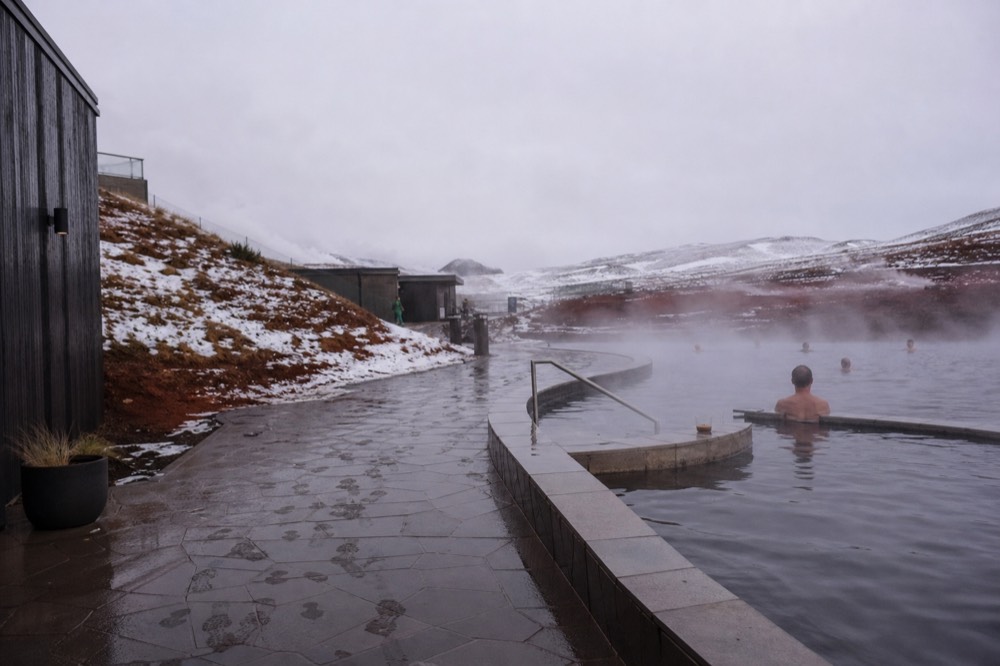
Earth Lagoon Mývatn publishes the most specific water chemistry of any venue: naturally alkaline, sulphur-rich, chlorine-free, arriving at 130°C from the Bjarnaflag borehole and cooled to 36-40°C, with roughly 3.5 million litres circulating through the lagoon and basin. Krauma attributes its water to Deildartunguhver and lists its minerals by name. Neither venue claims a skin benefit, and neither should be sold as an eczema alternative.
Earth Lagoon Mývatn, the rebuilt venue that reopened on 27 July 2026 with three admission tiers, is the clearest comparison case. Its lagoon page describes water from the National Power Company's Bjarnaflag borehole, arriving at around 130°C and cooled to 36-40°C, naturally alkaline and sulphur-rich, completely free of chlorine or added disinfectants. The venue also publishes a steam cave at an average 45°C and states that the lagoon and surrounding basin circulate approximately 3.5 million litres of geothermal water. It is the most forthcoming venue in the country about its own water, and it still makes no health claim. If you want to bathe in well-described mineral water without the Blue Lagoon price, this is the honest option, and the reopening added a swim-in steam cave, a lagoon bar and roughly a third more capacity.
Krauma, in West Iceland near Deildartunguhver, is the other venue whose water story is genuinely distinctive. Krauma's own pages describe the spring as having the highest flow rate of hot springs in Europe, pumping 180 litres of 100°C water per second, some of which heats homes in West Iceland before a portion is cooled with glacier water from Rauðsgil for bathing. Its five hot baths run 37-42°C with a 5-10°C cold plunge, and the venue lists the water's main minerals as iron, aluminium, calcium, magnesium and sulphur. Again, minerals named, outcomes not promised. For a reader with eczema, the practical difference between venues is temperature and sulphur exposure, not healing power.
Sky Lagoon deserves a caution rather than a recommendation on this topic. Its seven-step Skjól Ritual text includes venue wording about steam that "opens your pores, removes toxins and cleanses your skin", and that is exactly the kind of language that should be read as atmosphere, not dermatology. The venue publishes a lagoon temperature of 38-40°C and a cold plunge at 5°C. The contrast between hot and cold that defines the ritual is invigorating for most people and potentially irritating for reactive skin, so anyone with a flare should treat the full seven steps as optional.
Practical Bathing Advice For Sensitive Skin
The rules that matter for eczema-prone skin are the same ones every bather in Iceland follows, plus ordinary dermatological caution: shower without a swimsuit before entering, keep hot soaks short, rinse and moisturise afterwards, and skip the water entirely during a painful flare. Iceland's shower-before-bathing rule is a legal requirement under regulation 814/2010, not a suggestion, and it exists because many lagoon waters run with little or no chlorine.
The shower rule deserves a sentence of explanation, because visitors sometimes bristle at it. Icelandic regulation 814/2010 requires guests to wash themselves without swimwear before entering pools and bathing lagoons, and Reykjavík City's own guidance ties the rule directly to limiting chlorine use. At lagoons like Earth Lagoon Mývatn and Vök Baths, which publish that no chlorine or chemicals are added, and at Blue Lagoon, where the water self-renews roughly every 40 hours, the cleanliness of the water depends partly on bathers arriving clean. It is also free soap and hot water, which is not a bad deal before a mineral soak.
For eczema specifically, the practical points are unglamorous. Heat above body temperature is a common trigger, so a 37-40°C lagoon is a warm bath by another name, and the same limits apply. Sulphur-rich water can sting cracked or open skin, so timing a visit for a calm period rather than a flare is sensible. Rinse off afterwards in the showers, pat dry rather than rubbing, and apply moisturiser while the skin is still damp. Bring your own conditioner and use it: Blue Lagoon's silica advice about hair applies to skin-adjacent hairlines too. And if you are under active dermatological treatment, ask the person treating you, not a tour listing, whether a long hot mineral soak fits your plan.
One last thing worth knowing before you book anything. The Blue Lagoon sits beside an active volcanic system, and this site keeps its guidance on that situation deliberately narrow, in line with what the Icelandic Meteorological Office publishes. If you want the full picture of current status and what it means for a visit, read our page on Blue Lagoon and the volcano, and for the ticket tiers themselves, the guide to Blue Lagoon ticket options explained covers what Comfort, Premium and Signature each include. The wider question of whether the visit justifies the price is tackled honestly in is Blue Lagoon worth it in Iceland, and this site, Lagoons in Iceland, keeps every figure on that page sourced from the venue's own published material.
If your skin is the reason you are going, book the ordinary admission, plan a short first soak, and treat anything a listing says about healing as marketing. The water is real, the clinic is real, the research history is real. The promise is the one thing nobody with integrity will sell you.
Common Questions About Blue Lagoon And Eczema
Is Blue Lagoon Good For Eczema?
Blue Lagoon does not claim its water treats eczema, and this site does not either. The venue operates a dermatology clinic that opened in 1995 for chronic skin conditions and publishes research on its silica- and algae-rich geothermal seawater. Whether a soak suits your skin is a question for you and a doctor, especially during a flare.
Is Blue Lagoon good for acne?
No venue, Blue Lagoon included, publishes a claim that its water treats acne. The venue's skincare line grew out of research on the lagoon's novel blue-green algae, identified in 1996 and patented in 2006, but that is product research, not a promise that bathing clears skin.
Is the Blue Lagoon actually good for your skin?
The water is mineral-rich, untreated and renews roughly every 40 hours, and the venue describes it as enriching. Many people find a soak pleasant and their skin fine afterwards. "Good for your skin" as a health outcome is not something the venue itself claims for recreational bathing.
Can you go in the Blue Lagoon with broken or cracked skin?
The venue publishes no rule against it, but sulphur- and mineral-rich water can sting open or cracked skin, and heat above body temperature is a common eczema trigger. During a painful flare, the sensible choice is to wait, and to ask a dermatologist if you are under treatment.
Does Blue Lagoon water contain chlorine?
No. The venue states the geothermal seawater is not chlorinated or treated in any way, and that it fully renews roughly every 40 hours with no additives.
Do other Icelandic lagoons make skin claims?
Some use marketing language about purity or detox in their own voice, but none of the ticketed lagoons publishes a medical claim, and only Blue Lagoon operates a dermatology clinic. Earth Lagoon Mývatn and Krauma describe their water's chemistry in detail without attaching any health outcome.