Can You See The Northern Lights At Sky Lagoon?
An honest answer on northern lights and Sky Lagoon: what the official sources say about season and guarantees, how city light spill affects the Kópavogur shore, and which rural lagoons sit under darker skies.
Can You See The Northern Lights At Sky Lagoon?
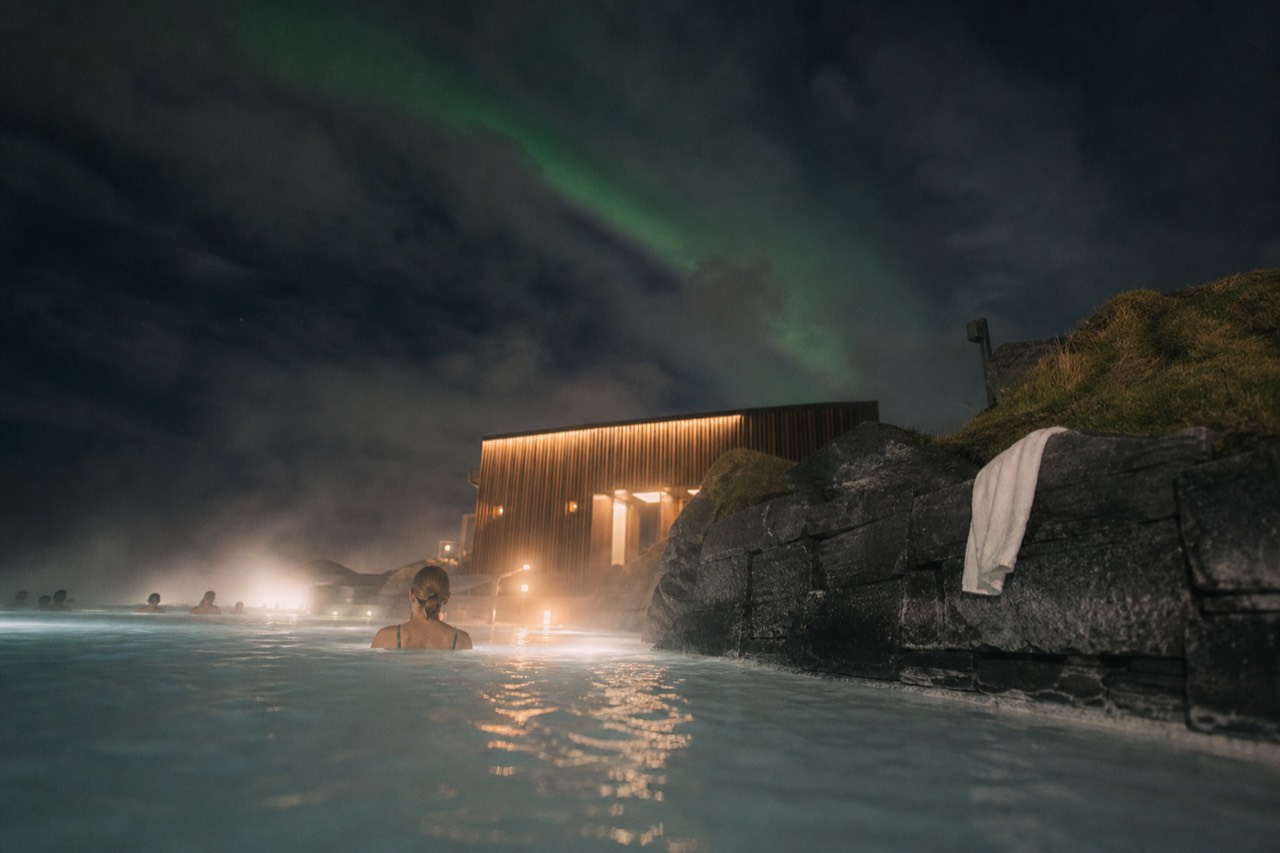
Sometimes, on strong nights, but no venue or official body promises them. Business Iceland, the official travel guide, states plainly that there are no guarantees of seeing the northern lights during any stay, and it notes that sightings are greatly improved outside populated areas, especially away from the light pollution of the capital. Sky Lagoon is, by its own description, only minutes from central Reykjavík.
That combination, an ocean-edge lagoon beside a city, is exactly the tension this page exists to untangle. The northern lights are a real, regular winter phenomenon in Iceland. Business Iceland frames the season as running from September to April, when dark and long nights have taken over from the bright summer nights, and says activity is said to be most active around the equinoxes in September and March. The Icelandic Met Office maintains a dedicated aurora forecast page with a low and mid-level cloud overlay and a six-day outlook, which is the tool any aurora plan should start from.
What no official source will do is attach a probability to a specific place or night. The conditions needed are darkness, clear skies or at least openings in the cloud cover, preferably towards the north, and solar wind activity above normal. A lagoon on the edge of a town has darkness for part of the year and a northern horizon over open water, but it also has the glow of a capital region behind and around it. That glow is the single biggest factor working against Sky Lagoon as an aurora spot, and it is worth understanding before you build an evening around it.
If your plan is a late soak with an outside chance of a display, Sky Lagoon's published hours matter, and we come to them below. If your plan is specifically to see the lights, the stronger play is a lagoon well away from town, and this site has a dedicated guide to that question: lagoons with genuinely dark skies. This page stays on the Sky Lagoon question and the honest limits around it.
What The Official Sources Actually Say About Seeing Aurora In Iceland
Business Iceland's position has three parts: the season runs September to April, sightings improve greatly outside populated areas away from capital light pollution, and there are no guarantees you will see the northern lights during your stay. The Icelandic Met Office adds the practical layer, an aurora forecast with cloud overlay and a six-day outlook, and notes activity is usually strongest around midnight and a few hours either side.
That last point deserves emphasis because marketing copy often blurs it. Sky Lagoon sells an entrance pass and a seven-step ritual; it does not sell an aurora experience, and its own pages retrieved for this site's research make no northern-lights promise. The same is true of every geothermal venue in the roster. What a lagoon can offer is a warm, dark-ish place to wait outdoors during the hours when activity is usually strongest, which is a genuine comfort in an Icelandic winter but is not the same as a viewing guarantee.
The official framing on timing is also more specific than most travel copy suggests. Business Iceland says the northern lights can appear any time of the day or night, all year round, but that the activity is usually strongest around midnight and a few hours before and after. The Met Office forecast lets you layer cloud cover over that timing, which matters more than anything else: a clear sky in Reykjavík beats a cloudy sky in the middle of nowhere, every single time. Check the forecast on the evening itself rather than the week before, and be ready to move.
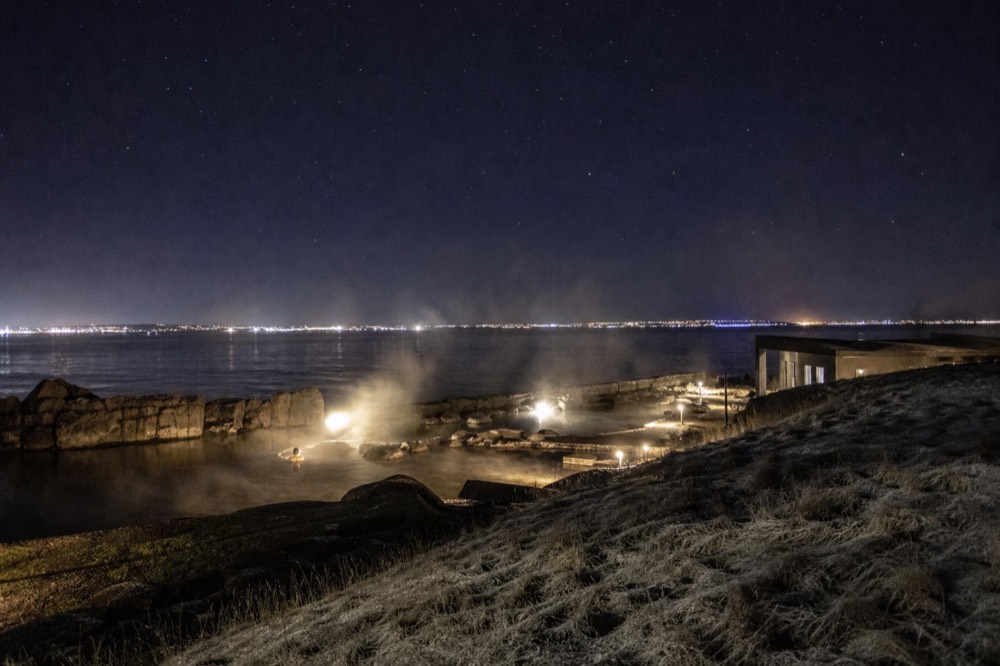
There is one more official line worth carrying into any aurora plan. Business Iceland notes that sightings improve outside populated areas, especially away from the light pollution of the capital. That is not a judgement about Sky Lagoon specifically, but Sky Lagoon is by definition inside the populated area the advice points away from. It is a short drive or bus ride from the city centre, which is its great strength for convenience and its structural weakness for aurora hunting.
For travellers weighing the whole evening, the question of whether the venue itself is worth the ticket is separate from the aurora question, and it is covered in detail in is Sky Lagoon in Iceland worth it. The short version: the pass, the ritual and the ocean edge stand on their own, and any aurora is a bonus rather than the reason to book.
How Light Spill Affects The Kársnes Shoreline
Sky Lagoon sits at the edge of Kársnes in Kópavogur, which the venue describes as 13 minutes from the city centre. That proximity means capital-area light spill: the sky glow from Reykjavík and Kópavogur sits behind and beside the lagoon, and it washes out the faint, low-contrast green most aurora displays actually produce. Strong displays punch through; faint ones do not.
This is the part of the answer that gets glossed over. Aurora photography online is dominated by vivid, high-activity nights, but the typical display in Iceland is a pale green arc or faint curtain, and pale green is exactly what urban sky glow erases. On a modest activity night, a viewer standing on the Kársnes shore may see little or nothing while a viewer an hour's drive into the countryside sees a clearly defined arc over the same sky. The lights are there in both places; the contrast is not.
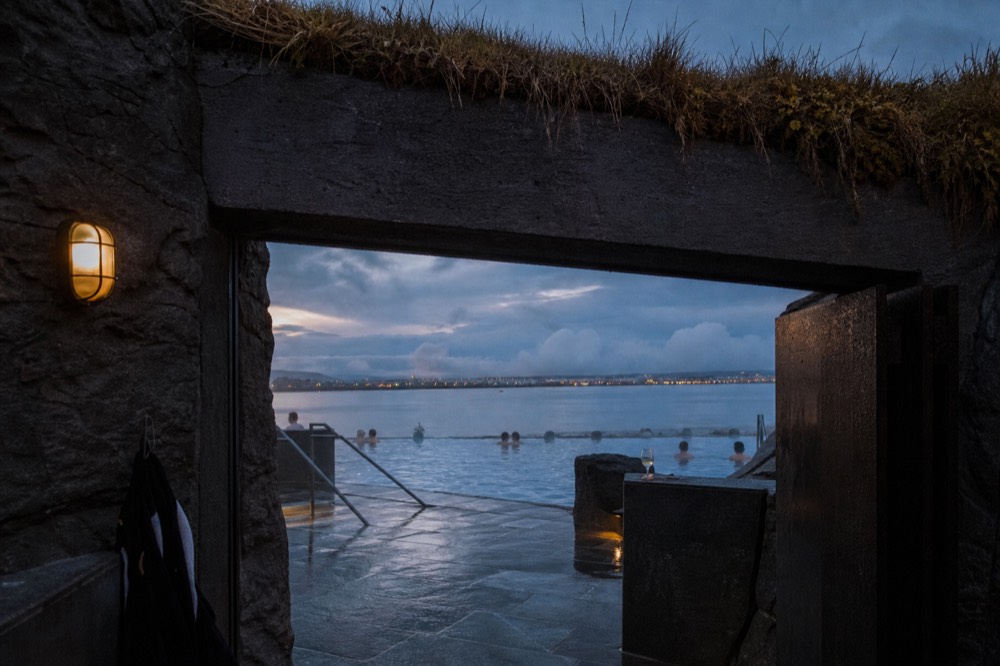
The venue's own orientation offers one partial mitigation. Sky Lagoon faces the open ocean, and its published directions emphasize the ocean views through seaside windows in the sauna. An ocean horizon to the north means part of the sky sits over dark water rather than over lit streets, and if the display sits low over that horizon, the water side of the lagoon is the side to watch. It is a real advantage over a pool in a lit inland town, and it is the reason the answer to this page's question is "sometimes, on strong nights" rather than a flat no.
The honest comparison, though, is not between Sky Lagoon and a worse city spot. It is between Sky Lagoon and the rural lagoons further around the coast, where the nearest significant settlement is a village rather than a capital region. The table below sets out that contrast using what the venues themselves publish about their locations.
| Venue | Setting as the venue describes it | Light-spill picture |
|---|---|---|
| Sky Lagoon | Edge of Kársnes, Kópavogur, 13 minutes from central Reykjavík | Capital-area glow behind and beside the site; ocean horizon to one side |
| Hvammsvík Hot Springs | Hvalfjörður, a 45-minute drive from Reykjavík on route 47 | A fjord setting well outside the capital area; the venue describes eight natural springs along the shoreline |
| Vök Baths | Lake Urriðavatn, a 5-minute drive from Egilsstaðir in the east | A small-town lakeside setting; the venue describes pools built out over the lake |
| Earth Lagoon Mývatn | Jarðbaðshólar by Road 1 in the Mývatn area of the north | A rural geothermal area; the venue publishes distances of 58 km from Húsavík and 89 km from Akureyri |
| Secret Lagoon | Hverahólmi geothermal area near the village of Flúðir | A farming village setting in the south, far from the capital region |
The pattern is simple: the further the venue sits from a settlement, the better the sky contrast, and the official advice to seek darkness outside populated areas points the same way. Hvammsvík, on its fjord an hour short of the west, and Vök, on its lake in the east, are the roster's clearest cases of lagoons that combine warm water with genuinely non-urban skies. For a fuller treatment of that trade-off, including which venues pair best with an aurora-focused itinerary, read the dark-skies lagoon guide.
Which Sky Lagoon Slots Give You The Best Chance
Sky Lagoon's winter hours run 10 a.m. to 9 p.m. from 21 October to 30 April, with guests asked to leave the lagoon 30 minutes before closing. That puts the last in-water minutes at 8:30 p.m., early for aurora timing: the Met Office says activity is usually strongest around midnight and a few hours either side. The latest bookable slot is therefore the best slot.
The seasonal blocks matter here. Sky Lagoon publishes four: winter 10 a.m. to 9 p.m. from 21 October to 30 April, spring 10 a.m. to 10 p.m. from 1 May to 20 June, summer 8 a.m. to 11 p.m. from 21 June to 20 August, and autumn 9 a.m. to 10 p.m. from 21 August to 20 October. Only the winter block overlaps the official September-to-April aurora season in full, and it is also the block with the earliest closing time. An evening soak in January ends in the water by 8:30 p.m.; the hours of strongest typical activity begin later.
What that means in practice is a choice between two plans. Plan one: book the latest winter entry the listing offers, accept that you are soaking three to four hours before the typical activity peak, and treat any display as a genuine bonus. Displays do occur before midnight, the Met Office's wording is "usually strongest", not "only", and a warm pool is a far better place to wait out a cold evening than a car park. Plan two: soak earlier in the evening, leave Sky Lagoon at closing, and drive or join a tour out of the capital area for the midnight hours. Plan two is the one that matches the official advice on both timing and darkness.
One practical note on the ticket itself: Sky Lagoon's terms state that your ticket grants entry at a certain date and time, and if you leave the premises after entering, the ticket is no longer valid. There is no pop-out-and-return structure, so the slot you book is the window you have. If aurora is the priority, book the latest slot the listing shows and plan the after-lagoon hours separately. The pass itself, from $117 on the live listing, covers the seven-step ritual and unlimited lagoon and cold-plunge access within that window.
For readers planning the whole evening around the water rather than the sky, the question of how long to stay has its own answer, and it is covered in how long to spend at Sky Lagoon. The short version is that the ritual plus soaking time fits comfortably inside the venue's hours, so the slot choice is about darkness timing, not about rushing the experience.
Lagoons Out Of Town With Genuinely Darker Skies
Yes, two lagoons on this list sit far enough from Reykjavík to match the official darkness advice: Hvammsvík Hot Springs on Hvalfjörður, a 45-minute drive from the capital, and Vök Baths on Lake Urriðavatn in the east, just 5 minutes from Egilsstaðir. Neither venue promises aurora, but both sit under far less washed-out skies than Kópavogur.
Hvammsvík is the easier of the two to reach from Reykjavík, and its setting does most of the work. The venue publishes its location on route 47, before the Hvalfjörður tunnel, with the fjord's dark water and hills around the springs. Its published hours run later into the evening than Sky Lagoon's winter block: 10:30 to 20:30 daily in the winter season from 21 August to 31 May, with last entry at 19:00. That is still an early finish against the midnight activity peak, but the drive out and back puts you in dark countryside during the evening, which is where the official advice points.
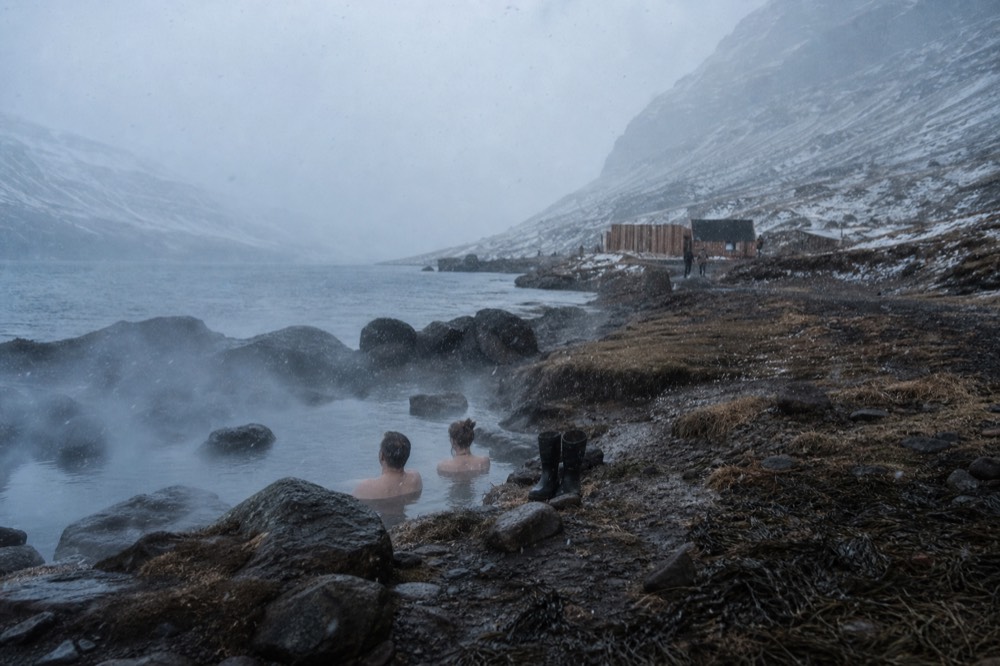
Vök is an east-country option, which suits a Ring Road itinerary rather than a Reykjavík base. The venue describes pools built out over the lake, with a main pool and two floating pools it calls Vakir, and its FAQ notes a temperature range across the pools. Its published hours run later than either capital-area venue in the summer window, 10:00 to 23:00 daily from 15 June to 15 September, and 12:00 to 22:00 for the rest of the year, with guests asked to leave the pools 15 minutes before closing. In the depths of the aurora season the last in-water minutes fall at 21:45, again ahead of the typical peak, but the surrounding darkness is the real asset.
The table below collects the published closing picture across the roster's main evening venues, because the practical question is always the same: how late can you actually be in warm water?
| Venue | Published season blocks | Published closing time | Last in-water minutes |
|---|---|---|---|
| Sky Lagoon | Four seasonal blocks, winter 21 Oct to 30 Apr | 9 p.m. in winter | 8:30 p.m. (guests leave lagoon 30 min before closing) |
| Hvammsvík | Winter 21 Aug to 31 May; summer 1 Jun to 20 Aug | 20:30 in winter | Last entry 19:00 |
| Vök Baths | 15 Jun to 15 Sep; 16 Sep to 14 Jun | 23:00 summer, 22:00 otherwise | 15 min before closing; last entrance 45 min before |
| Earth Lagoon Mývatn | Hours may vary seasonally | 22:00 daily as published | Guests may stay until 21:40 in wintertime, 22:40 in summertime, per the venue FAQ |
| Secret Lagoon | Winter 1 Oct to 31 May; summer 1 Jun to 30 Sep | 19:00 winter, 20:00 summer | Not published as a separate figure |
Read that table honestly and a pattern emerges: no commercial lagoon on this roster is open at midnight, which is when the Met Office says activity is usually strongest. The realistic aurora-plus-lagoon evening is a soak that ends by 9 or 10 p.m., followed by time outside under the sky afterwards, and the venues that make that follow-up easiest are the ones already sitting in the dark. That is the genuine case for Hvammsvík or Vök over Sky Lagoon on an aurora-focused night, and it is a case about geography rather than about any venue's quality.
Planning An Aurora Evening Without Overpromising
The workable plan has four parts: check the Met Office aurora forecast on the evening itself, pick the latest slot your chosen lagoon offers, position yourself away from direct light with a view to the north, and keep the after-lagoon hours free for a darker spot. None of these steps carries a probability of success, because the official position is that there are no guarantees.
Start with the forecast, not the venue. The Met Office page layers low and mid-level cloud cover over an activity outlook for six days, and a clear capital-area sky on a modest activity night will outperform a cloudy rural sky on a strong one. If the forecast shows a clear window at 11 p.m., your lagoon slot should end before it, not during it. If the whole night is cloud, soak for the soak and drop the aurora plan entirely; that is the honest outcome on plenty of Icelandic winter nights.
Then accept the structure of the evening. Warm water ends by 9 or 10 p.m. at every venue on the roster, the typical activity peak comes later, and the gap between the two is spent standing somewhere cold and dark. Dress for that gap: proper layers, hat and gloves, and a plan for where the dark somewhere is. From Sky Lagoon, the realistic move is a drive out of the capital area after closing. From Hvammsvík or Vök, you are already in it, and the venue's own surroundings are the viewing spot.
Finally, keep the safety basics in mind for any night driving in Iceland. Business Iceland warns that driving in Iceland involves gravel, snow and ice, and that attention is needed to the road surface, the weather and even animals, especially sheep. The road authority, Vegagerðin, publishes live road conditions and its traffic service number is 1777, and safetravel.is, run by the Icelandic Association for Search and Rescue, is the standing official channel for conditions and alerts. An aurora chase at midnight on an unfamiliar winter road is a driving decision first and a sky-watching decision second.
For the broader question of which lagoon to pair with a dark-sky itinerary, the dark-skies guide on this site covers the full roster, and for the capital-area decision between the two big venues, Sky Lagoon tickets and packages lays out the pass tiers in detail. The site itself, Lagoons in Iceland, exists to answer exactly these trade-off questions with published figures rather than promises.
Common Questions About The Northern Lights At Sky Lagoon
Can You See The Northern Lights At Sky Lagoon?
Sometimes, on strong nights, but there is no guarantee and no venue or official body offers one. Sky Lagoon sits minutes from central Reykjavík, and Business Iceland notes that aurora sightings are greatly improved outside populated areas away from capital-area light pollution. A vivid display can punch through city glow; a faint one usually cannot.
What time of year is the aurora season in Iceland?
Business Iceland frames the season as September to April, when dark nights return, and says activity is said to be most active around the equinoxes in September and March. The northern lights can technically appear at any time of day or night, all year round, but darkness and clear skies are required to see them.
What time of night is best for aurora?
The Icelandic Met Office says activity is usually strongest around midnight and a few hours before and after. Sky Lagoon's winter closing time of 9 p.m., with guests leaving the lagoon 30 minutes before closing, ends the soak hours before that typical peak, so the latest bookable slot is the best one.
Does Sky Lagoon promise northern lights on its ticket?
No. Sky Lagoon sells an entrance pass and the seven-step ritual, and its own published pages make no northern-lights promise. No venue on this site's roster sells aurora as part of admission, and the official position is that there are no guarantees.
Which lagoons have darker skies than Sky Lagoon?
Hvammsvík Hot Springs on Hvalfjörður, about a 45-minute drive from Reykjavík, and Vök Baths on Lake Urriðavatn near Egilsstaðir in the east, both sit well outside the capital region. Earth Lagoon Mývatn in the north and Secret Lagoon at Flúðir are also rural settings. None promises aurora, but all offer darker skies than Kópavogur.
Where should I check the aurora forecast?
The Icelandic Met Office publishes an aurora forecast with low and mid-level cloud overlay and a six-day outlook, and Business Iceland directs readers to the Met Office website and Auroraforecast.is. Check on the evening itself rather than days ahead, because cloud cover decides the outcome more than anything else.