Why Can't You Get Your Hair Wet In The Blue Lagoon In Iceland?
Blue Lagoon's silica-rich geothermal seawater can leave hair stiff and unmanageable. Here is what the venue actually advises, why the conditioner station exists, and which other lagoons carry the same mineral load.
Why Can't You Get Your Hair Wet In The Blue Lagoon In Iceland?
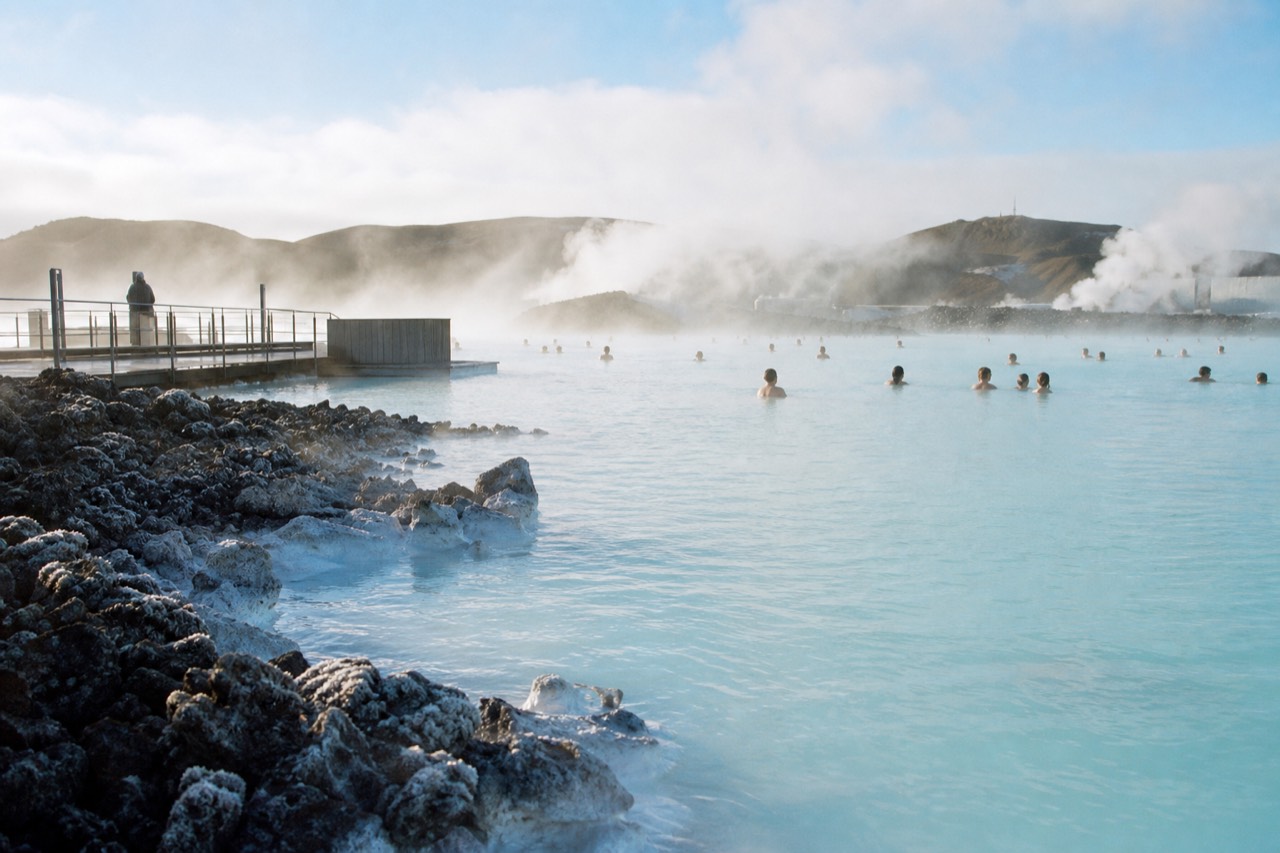
You can get your hair wet, but Blue Lagoon advises against soaking it unprotected. The lagoon's geothermal seawater carries high levels of silica, a mineral that binds to hair strands and leaves them temporarily stiff and difficult to manage. The venue's own guidance is to work conditioner through your hair before entering and leave it in while you bathe.
The question shows up constantly in search phrasings, and it is usually asked by someone who has seen a photo of a swimmer with hair piled on top of their head and wondered whether there is a rule against going under. There is no rule. Nothing at the lagoon forbids wet hair, and no member of staff will stop you from ducking your head. What exists is an advisory, published by Blue Lagoon itself, and it exists because of one specific mineral.
Blue Lagoon's water page describes how ocean water and freshwater converge around two thousand metres within the earth, under searing heat and extreme pressure, and emerge enriched with silica, algae and minerals. The water reaches the lagoon at about 38°C after starting its journey at roughly 240°C underground, and the venue says its iconic blue colour comes from the way silica reflects sunlight. That same silica is the reason for the hair advice. It is not harmful, but it clings to hair in a way that surprises people who have never swum in mineral-heavy water before.
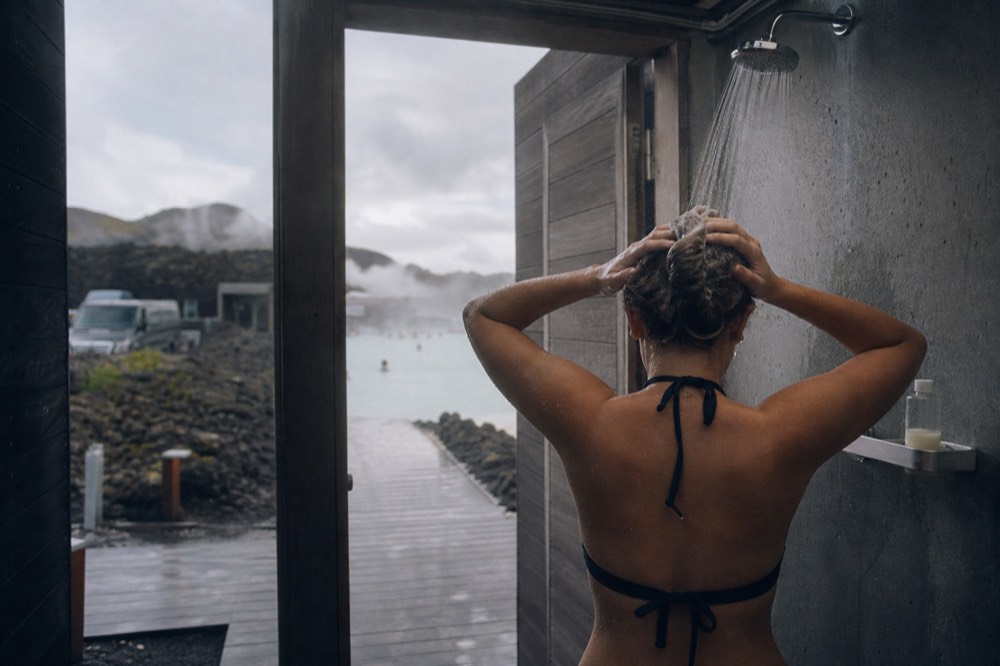
The venue states the position plainly on its etiquette page: geothermal seawater has high levels of silica, and while not harmful to hair, silica can make hair temporarily stiff and difficult to manage. The recommended routine is to apply conditioner before entering and leave it in for the whole soak. This is why the changing and shower areas include complimentary conditioner: the venue knows the mineral is there and has built the workaround into the visit. For anything else about planning the day, from arrival windows to what each admission tier includes, the Blue Lagoon tickets and packages guide covers the practical detail.
If you are weighing the soak against other options in the capital area, these three are the natural comparisons.
What Silica Actually Does To Hair
Silica is a dissolved mineral that deposits a fine film on hair strands as they move through the water. The film is not damaging and it washes out, but while it is present it makes hair feel coarse, dry and stiff, and it can turn long hair into a tangled mass that takes real effort to brush through. Blue Lagoon describes the effect as temporary, and the conditioner routine exists to prevent it.
The mechanism is simple enough. Hair is porous, and mineral-laden water leaves deposits inside and along the strand as it dries. Anyone who has swum in hard tap water or salty seawater has felt a milder version of the same thing. Blue Lagoon's water is a much stronger case because the mineral concentration is a defining feature of the lagoon rather than an incidental one. The venue's own water story treats silica as the signature ingredient, the substance behind both the colour and the skincare products sold on site.
How long the effect lasts depends on the hair. For most people the stiffness persists until the hair is washed properly with shampoo and clean water, so the practical answer is: it lasts through the rest of the day if you do nothing about it, and it ends with a normal shower. Long, bleached or already dry hair tends to pick up more deposits and take longer to recover. People with very short hair often notice almost nothing, which is why the advice gets argued about online by visitors with completely different hair types.
What the effect is not matters just as much. Silica does not bleach hair, and the venue makes no claim that it does. It does not ruin a swimsuit, and it does not damage a tattoo; those claims circulate in travel forums and none of them appears in Blue Lagoon's own published guidance. The two body-related advisories the venue does publish concern hair and jewellery: silica makes hair stiff, and geothermal seawater can tarnish metal, which is why the venue recommends removing jewellery before entering. Contact lens wearers are also advised to remove lenses, since salt and minerals in the water can irritate eyes.
There is a second, quieter reason locals keep their hair dry. Icelandic bathing culture treats the pre-swim shower as a thorough, soap-and-water affair without swimwear, a habit enshrined in national pool regulation, and by the time you get to the water you are clean, conditioned and dry-haired. The hair advice at Blue Lagoon is one piece of that wider culture. The etiquette around it is covered in detail in the rules and etiquette for Icelandic hot springs.
Why Don't You Get Your Hair Wet In Blue Lagoon?
Mostly because of the aftermath rather than the water itself. Wet hair in the lagoon soaks up silica, and the result is stiff, straw-textured hair for the rest of the day unless you wash it out. Locals and repeat visitors skip the dunk because they know the routine, while first-time visitors who ignore the advice usually discover it an hour later, standing in a hotel bathroom with a brush that will not pass through their hair.
The gap between what the venue advises and what visitors actually do is where the confusion lives. The advisory is voluntary, the water feels wonderful, and plenty of people swim with their heads under and report no problems at all, usually people with short or naturally oily hair. The ones who write the frustrated forum posts are almost always the ones with long, coloured or dry hair who went under without conditioner. Here is how the two positions line up.
| What Blue Lagoon advises | What visitors actually do |
|---|---|
| Apply conditioner before entering and leave it in while bathing | Many skip it, especially short-haired visitors who have never had a problem |
| Keep hair out of the water where possible | Long-haired visitors pile hair up, braid it or use a clip |
| Shower without swimwear before entering, using the complimentary gel and conditioner | Followed by nearly everyone; it is a visible, staffed checkpoint |
| Remove jewellery to avoid tarnish from the mineral-rich water | Frequently ignored, then regretted when silver comes out discoloured |
| Remove contact lenses before entering | Followed by most lens wearers once they read the sign |
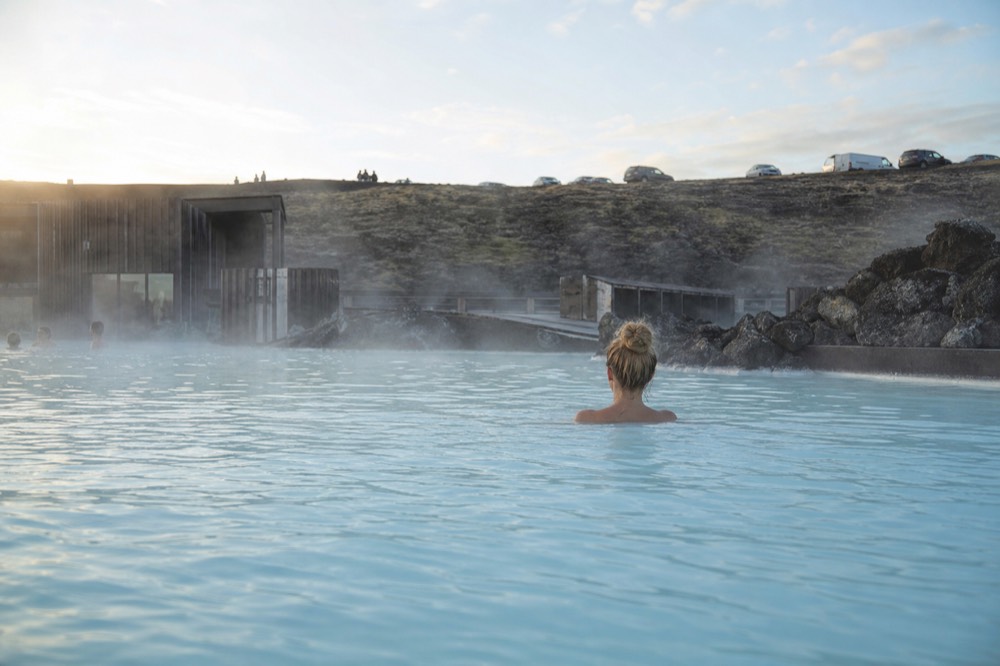
The venue's own wording on all of this is on its etiquette page, which covers the shower rule, the conditioner recommendation and the jewellery advisory in one place. It is worth reading before a visit because it also settles the other recurring questions: towels are included with admission, an electronic bracelet works as locker key and payment, and photography is welcome in the lagoon but banned in the changing rooms.
What To Do About It: The Conditioner Routine
Work a generous amount of conditioner through dry or damp hair at the shower station before you go outside, and leave it in for the entire soak. Do not rinse. The complimentary conditioner at Blue Lagoon exists for exactly this purpose, so there is no need to pack your own. After the visit, one normal shampoo wash removes the silica and the conditioner together.
The routine in practice takes under a minute. Shower first, as the rule requires, without swimwear and with the provided gel. Then, before putting your swimsuit on, coat your hair from root to tip in conditioner and leave it. A bun, braid or clip keeps long hair off the water for most of the visit, and the conditioner handles whatever splashes reach it. People who intend to swim properly should use more conditioner than feels reasonable, because moving water rinses it out faster than still soaking does.
Bring a hair tie if you have long hair. That single item does more for your afternoon than any product sold on site, because the surest way to avoid stiff hair is to keep it dry in the first place, and the second surest is the conditioner barrier. A small bottle of leave-in conditioner in your day bag is a reasonable backup for the drive back, though the venue's own supply is free and placed exactly where you need it.
One thing not to do: skip the shower. The pre-swim shower is a legal requirement in Iceland, not a suggestion, and at Blue Lagoon it doubles as the moment the conditioner gets applied. If you are staying in the capital and deciding how to fit the lagoon into an arrival or departure day, the Keflavik or Reykjavik stay comparison is the relevant planning read.
Do Other Icelandic Lagoons Have The Same Mineral Load?
Some do, some do not, and the difference is the water source. Blue Lagoon's geothermal seawater is unusually silica-rich. Earth Lagoon Mývatn and Secret Lagoon run sulphur-rich freshwater, which carries a smell rather than a hair problem. Sky Lagoon does not publish the origin of its water, and GeoSea's seawater is mineral-rich but the venue's advisories focus on flow rather than hair.
The hair question is really a Blue Lagoon question, but visitors on a longer trip often bathe at three or four lagoons and want to know whether the conditioner routine travels. The honest answer is that each venue's water chemistry is its own, and each publishes its own guidance. Here is what the venues themselves say about their water and their body-related advisories.
| Lagoon | Water, in the venue's own words | Hair or body advisory published |
|---|---|---|
| Blue Lagoon | Geothermal seawater, 70% ocean and 30% freshwater, rich in silica, algae and minerals | Conditioner recommended; jewellery removal recommended; lenses out |
| Earth Lagoon Mývatn | Naturally alkaline, sulphur-rich water from the Bjarnaflag borehole, free of chlorine | Remove silver or copper jewellery; sulphur causes tarnish |
| Secret Lagoon | Continuously flowing sulphur-rich water, fully replaced every 24 hours | None published on hair |
| Sky Lagoon | Geothermal lagoon at 38-40°C; the venue does not state the water's origin | Towels free; no robes or slippers provided |
| GeoSea | Hot seawater from two drillholes, flowing through the pools and into the sea | None published on hair |
| Krauma | Water from Deildartunguhver, rich in iron, aluminium, calcium, magnesium and sulphur | None published on hair |
Sulphur is the mineral that dominates most inland lagoons, and sulphur is a smell issue rather than a hair issue. The rotten-egg reputation that follows geothermal water around comes from sulphur, and it is the reason some visitors ask whether the lagoon stinks before they ask anything about hair; that question has its own full treatment in is there a smell at the Blue Lagoon. Silica, by contrast, is the Blue Lagoon's distinguishing mineral, and it is the one with the texture effect on hair.
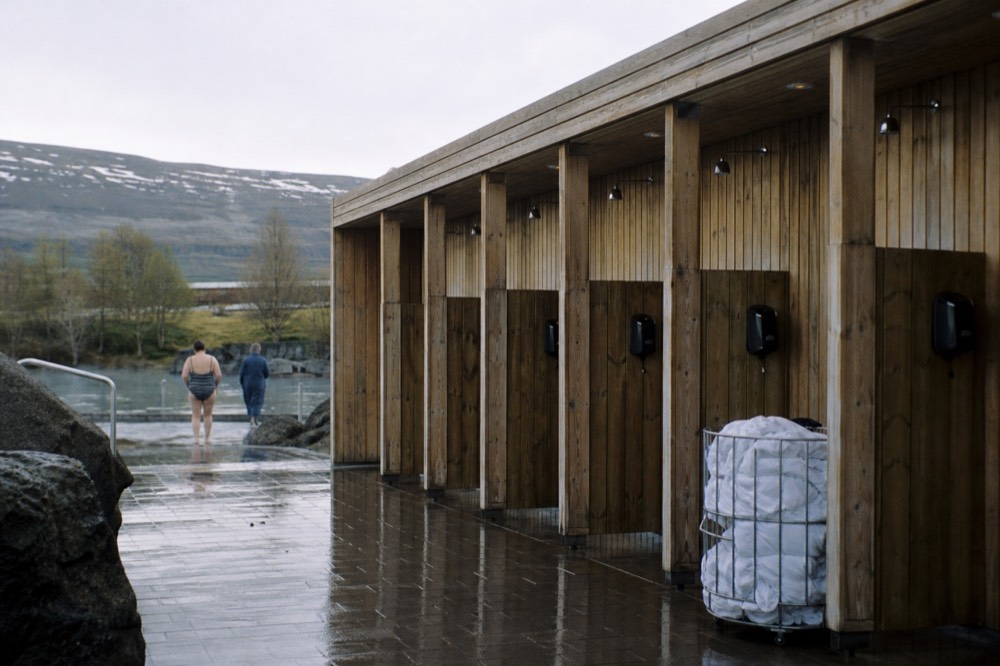
For a capital-area alternative with a completely different setup, Sky Lagoon runs its seven-step Skjól ritual around a 38-40°C lagoon on the edge of Reykjavík, with towels included and no robes or slippers on offer because the lagoon is accessed directly from the changing rooms.
What Each Lagoon Provides Free, And What You Rent
Blue Lagoon includes towel, shampoo, conditioner and moisturiser with every admission, plus a silica mud mask and a drink. Sky Lagoon includes towels and signature shampoo and conditioner. Secret Lagoon and Forest Lagoon charge small rental fees for towels, and Vök Baths includes shampoo and gel but rents towels. Check the inclusions before assuming a towel is free.
The conditioner station at Blue Lagoon is part of a broader inclusion package, and the free-versus-rental split across venues is worth knowing before you pack. Nobody wants to discover at the changing room door that the towel costs extra.
| Lagoon | Conditioner provided free | Towel | Robe or slippers |
|---|---|---|---|
| Blue Lagoon | Yes, plus gel and moisturiser | Included with admission | Robe with Premium and Signature tiers only |
| Sky Lagoon | Yes, signature shampoo and conditioner | Free for all guests | Not offered at all |
| Secret Lagoon | Not stated | Rental, 1,200 ISK | Not offered |
| Forest Lagoon | Not stated | Rental, 1,400 ISK | Not offered |
| Vök Baths | Shampoo and gel provided | Rental, 1,390 ISK | Rental, 1,990 ISK |
| Earth Lagoon Mývatn | Body wash, shampoo and conditioner provided | Rental, 1,200 ISK; included with Signature and Exclusive tiers | Robe with Earth Exclusive |
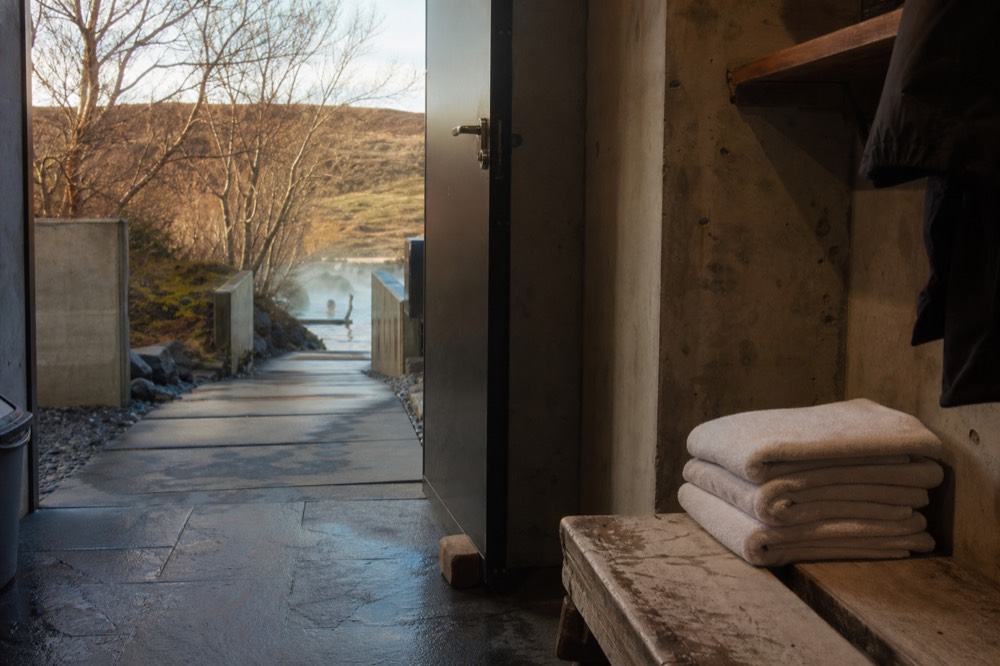
Blue Lagoon's own comparison with municipal pools is candid about the value of the inclusions: every admission covers the towel, a drink and the silica mud mask, plus unlimited access to the sauna, steam cave, colder lagoon and quiet area. A local sundlaug, in the venue's telling, is a chlorinated freshwater pool where entry costs a fraction of the price and no booking is needed. Two different products for two different days, and the free conditioner belongs firmly to the first one.
That origin is worth a closing thought. The mineral that stiffens your hair is the same mineral that created the lagoon in the first place, when excess water from the Svartsengi plant failed to seep through the porous lava because silica kept it from draining. The hair advice is not a marketing flourish; it is the practical consequence of bathing in the exact substance that holds the whole lagoon together. Lagoons in Iceland covers every venue on that spectrum, from silica lagoons to glacier lagoons, if the hair question has turned into a bigger trip question.
Common Questions About Hair And The Blue Lagoon
Why can't you wet your hair in Blue Lagoon?
You can, but you should condition it first. The geothermal seawater is rich in silica, which binds to hair and leaves it temporarily stiff and difficult to manage. Blue Lagoon recommends applying conditioner before entering and leaving it in while you bathe, and provides complimentary conditioner at the showers for exactly this purpose.
Why can't you have your hair down in the Blue Lagoon in Iceland?
You can have your hair down, nothing forbids it. Visitors with long hair usually clip, braid or bun it to keep it out of the mineral-rich water, because wet hair collects silica deposits that leave it feeling coarse until it is properly washed. Conditioner left in during the soak reduces the effect.
Why can't you dip your hair in the Blue Lagoon?
Dipping your hair is not against any rule. The reason people avoid it is the aftermath: silica in the water makes hair stiff, dry and hard to brush until it is shampooed with clean water. Short hair often shows no effect at all, which is why accounts differ so much online.
Does Blue Lagoon water damage your hair?
Blue Lagoon describes the effect as temporary and not harmful. Silica makes hair stiff and difficult to manage while it is in the strands, but it washes out with a normal shampoo. The venue publishes no claim of bleaching or permanent damage, and those claims should be treated as forum folklore.
How long does the stiff-hair effect last?
Until the next proper wash for most people. If you do nothing, the coarse texture can persist through the rest of the day. One shampoo with clean water removes the silica. Long, bleached or dry hair picks up more deposits and can take a couple of washes to feel normal again.
Is the conditioner really free at Blue Lagoon?
Yes. The shower areas include complimentary conditioner, and the venue's etiquette page recommends using it before entering and leaving it in your hair while you experience the water. Shampoo, shower gel and moisturiser are also provided, and towels are included with every admission tier.