What I Wish I Knew Before Going To Iceland
The practical surprises first-time visitors report from Iceland's lagoons: booking windows, the naked shower rule, silica and hair, the venue that takes Icelandic currency only, and what last-minute tickets cost.
What I Wish I Knew Before Going To Iceland
The surprises almost every first-time visitor reports are practical, not scenic: lagoon slots sell out and need booking ahead, the naked pre-swim shower is a legal requirement rather than a suggestion, silica-rich water stiffens hair and tarnishes silver, and one popular venue accepts Icelandic currency only. None of this is hidden. The venues publish all of it, just across a dozen separate websites.
The pattern shows up again and again in guest reviews and venue FAQ pages. People arrive expecting a spa country with relaxed rules and instead find a place with firm, enforced bathing culture, dynamic pricing that rewards early booking, and small operational quirks that are easy to miss. This page gathers what the venues themselves publish, plus the official rules behind them, so nothing on the list is folklore.
Start with the three experiences visitors book most often, because the booking habit is the single biggest thing people say they would change on a return trip.
Do You Really Need To Book Lagoon Tickets Before You Fly?
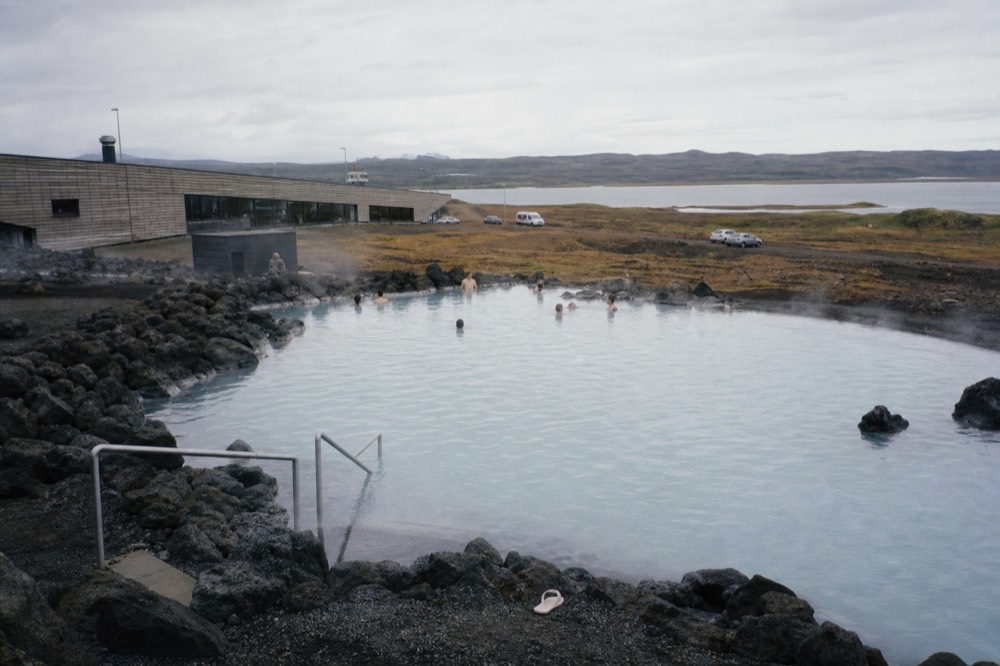
Yes at the busiest venues, and the venues say so themselves. Blue Lagoon states that pre-booking is essential and that entry is generally fully booked throughout the year. Secret Lagoon says it cannot guarantee a spot without a reservation. Vök Baths does not accept walk-ins at all from June 1 to August 31. Only a few venues, such as Fontana, still welcome walk-ins subject to availability.
Blue Lagoon's own day-visit page is unusually blunt about it: pre-booking is essential, and entry is generally fully booked throughout the year. The ticket carries a one-hour arrival window, and once inside you can stay in the lagoon as long as you like within opening hours. That combination, a strict arrival window plus open-ended stay, is why capacity tightens: nobody is rushed out, so evening slots in particular fill early.
The same habit applies across the roster. Secret Lagoon asks visitors to pre-book because high demand means no guaranteed spot otherwise. Hvammsvík requires advance online booking with a card before you arrive, and the venue is cashless on top of that. Vök Baths limits tickets per entrance time and simply closes the gate to walk-ins through the summer months. Forest Lagoon puts it plainly too: guests who have not pre-booked do not have guaranteed entry.
| Venue | What it publishes about advance booking |
|---|---|
| Blue Lagoon | Pre-booking essential; entry generally fully booked year-round; one-hour arrival window on the ticket |
| Sky Lagoon | Ticket grants entry at a set date and time; leaving ends the visit |
| Secret Lagoon | Pre-booking highly appreciated; no guaranteed spot without it |
| Hvammsvík | Advance online booking with card required; venue is cashless |
| Vök Baths | Walk-ins not accepted June 1 to August 31 |
| Forest Lagoon | No guaranteed entry without pre-booking |
| Fontana | Walk-ins welcome, subject to availability |
| Earth Lagoon Mývatn | Walk-ins welcome subject to locker availability; booking recommended |
The cheapest lesson here is timing rather than money: a ticket bought weeks ahead at the from-price beats a ticket bought at the airport. For the full price picture across every venue on this site, the Iceland lagoon ticket prices compared guide lays out each from-price side by side.
One booking worth making early is the Sky Lagoon ritual pass, which starts from $117 and includes the seven-step Skjól circuit, the cold plunge and a towel. Because each ticket is tied to a fixed date and time, and re-entry is not allowed once you leave, the popular sunset slots are the ones that disappear first.
Why Does Everyone Say You Must Shower Naked First?
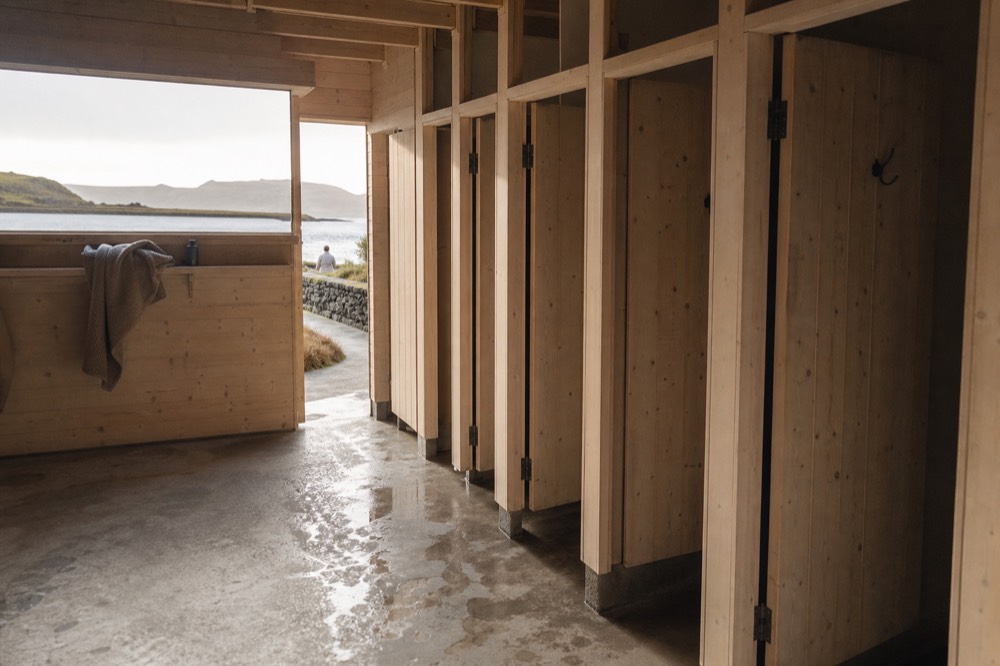
Because it is the law, not a house rule. Icelandic regulation 814/2010 on health practices at swimming and bathing facilities requires guests to wash themselves without swimwear before entering the pool, and requires facilities to provide mild liquid soap and display the instruction. Every major lagoon restates the rule in its own FAQ.
The regulation, published in Stjórnartíðindi, the Icelandic official gazette, sets out the requirement in article 9. Reykjavík City's own swimming guide explains the reasoning to visitors: thorough washing keeps the water clean and limits the amount of chlorine needed. At the geothermal lagoons, many of which use little or no chlorine at all, the shower rule does the work that chemicals do elsewhere. Earth Lagoon Mývatn describes its water as completely free of chlorine or added disinfectants. Vök Baths says purity is maintained through continuous flow. GeoSea says the steady flow of water between its pools keeps it within health-regulation limits without cleaning agents.
The practical version: shower without your swimsuit, with soap, before you dress for the water. Swimwear is then compulsory in the lagoon itself. Forest Lagoon's FAQ is explicit that underwear, pants and sweaters do not count as swimwear, and Sky Lagoon says bathing suits are obligatory in the lagoon area and the ritual.
| Rule that surprises first-timers | Who publishes it |
|---|---|
| Shower naked with soap before entering, swimwear on in the water | Regulation 814/2010; restated by Blue Lagoon, Sky Lagoon, Vök, Forest Lagoon, Earth Lagoon |
| Remove shoes before entering changing rooms | Reykjavík City swimming guidance |
| Silver and copper jewellery can tarnish in sulphur-rich water | Earth Lagoon Mývatn |
| Apply conditioner to hair before entering and leave it in | Blue Lagoon |
| No robes or slippers at all | Sky Lagoon |
| Photography banned in changing rooms and showers | Sky Lagoon, Blue Lagoon, Vök Baths |
First-timers also underestimate how strictly this is enforced. Staff at Icelandic pools and lagoons genuinely monitor the showers, and visitors who skip the soap are regularly asked to go back. It feels awkward for about ninety seconds. It is also the reason Iceland can run geothermal water with so little chlorine, which is exactly what makes the lagoons pleasant to soak in.
Will The Water Really Mess With Your Hair And Jewellery?
Yes, and the venues warn about it directly. Blue Lagoon says its silica-rich geothermal seawater can make hair temporarily stiff and difficult to manage, and recommends applying conditioner before entering and leaving it in. Earth Lagoon Mývatn recommends removing silver or copper jewellery because sulphur in the water causes tarnish and discoloration. Both advisories are published, not rumours.
The hair advice is the one people regret ignoring most, because the fix costs nothing. Conditioner is provided free at the shower stations at Blue Lagoon, and the venue's etiquette page tells guests to work it through their hair and leave it in while bathing. Silica is not harmful to hair, in the venue's own words, but it clings and stiffens. Anyone with long hair who has tried to brush it out afterwards will recognise the description.
Jewellery is the quieter trap. Sulphur-rich geothermal water reacts with silver and copper, and Earth Lagoon Mývatn's advisory to remove it before a visit is worth treating as a general rule for every sulphurous lagoon. Blue Lagoon gives the same advice for its mineral-rich seawater. Leave the rings in the locker, which at most venues means a wristband system that doubles as your locker key and, often, your cashless payment method inside.
Contact lens wearers get a warning too. Blue Lagoon recommends removing lenses before entering, because salt and minerals in the seawater can irritate eyes, and notes that silica can damage spectacle lenses if submerged. For a deeper look at the hair question specifically, the why you can't get your hair wet in the Blue Lagoon post covers the chemistry and the workarounds.
Which Venue Takes Icelandic Currency Only?
Forest Lagoon, above Akureyri, publishes a strict payment rule: it accepts Icelandic currency only. Its FAQ spells out the detail, cash in ISK and all credit cards except American Express. It is the one venue on the roster whose published payment policy reads that way, so anyone touring the north should not assume the payment habits of the capital area follow them.
The rule is easy to miss because most visitors never carry krona at all. Forest Lagoon's homepage states plainly that it only accepts Icelandic currency at the lagoon, and the FAQ clarifies that this means ISK cash plus credit cards, with American Express excluded. Hvammsvík goes part of the way there: it is fully cashless, requires advance online booking with a card, and also excludes American Express. The full index of guides sits on Lagoons in Iceland.
What no honest source will tell you is that you can skip cash entirely everywhere in Iceland, because no official or institutional Icelandic source says that, and at least one venue's published policy contradicts it. The safe planning position is the one the venues themselves support: cards work at almost every lagoon on this roster, but check the venue's own payment page before you go, carry some krona for the north, and do not rely on American Express anywhere.
The other payment surprise is what is included free versus what costs extra. Towels are a good example of the spread: Sky Lagoon includes towels free for every guest, Blue Lagoon includes towel use in its Comfort admission, while Forest Lagoon rents towels for 1,400 ISK and Earth Lagoon Mývatn rents them for 1,200 ISK. Swimsuit rental exists at most venues, usually for roughly 1,100 to 1,600 ISK, but check each listing rather than budgeting on a single number.
| Venue | Included with standard admission | Costs extra |
|---|---|---|
| Blue Lagoon | Towel use, mud mask, one drink, sauna and steam bath | Bathrobe (Premium tier and up), extra masks, massages from ISK 20,900 |
| Sky Lagoon | Towel, seven-step Skjól Ritual, cold plunge | Swimsuit rental or purchase; no robes or slippers offered at all |
| Secret Lagoon | Pool entry, continuously flowing water | Swimsuit rental 1,200 ISK, towel rental 1,200 ISK |
| Forest Lagoon | Pool entry | Towel rental 1,400 ISK; drinks on higher tiers |
| Earth Lagoon Mývatn | Lagoon, hot tub and steam bath on the Essential tier | Towel rental 1,200 ISK, swimsuit rental 1,100 ISK; towel and drink on Signature tier |
Is There A Cheap Way To Do The Lagoons?
Yes, and the gap is wide. Secret Lagoon at Flúðir is the cheapest bookable ticket on this roster at from $35, against Blue Lagoon's Comfort admission from $146 and Sky Lagoon's ritual pass from $117. Secret Lagoon also publishes a walk-in adult price of 4,500 ISK with swimsuit and towel rental at 1,200 ISK each, so the budget option stays budget even with rentals added.
The cheapest-option strategy works because Secret Lagoon's venue-published price is low and its inclusions are honest: entry to a continuously flowing 38-40°C pool, with rentals priced separately and clearly. Its winter hours run 10:00 to 19:00 daily from October through May, and summer hours 10:00 to 20:00, which is plenty of scheduling room. The venue's own claim to be Iceland's oldest swimming pool, made in 1891, is its marketing line rather than established fact, but the age of the place is part of the appeal either way.
For anyone pairing the lagoon with a Golden Circle day, the arithmetic gets even better, and the Iceland lagoons on a budget guide breaks down the full cost stack. The short version: book the cheapest venues direct, rent nothing you can pack, and put the savings toward one premium experience rather than three mediocre ones.
How Hard Is Getting Around, Really?
The airport transfer is simple: Flybus runs the official Keflavík to Reykjavík service, a published 45-minute journey, with a quoted one-way fare of 3,999 ISK for one adult. The part that catches people out is the Highlands: mountain road openings depend on weather and snowpack each spring, and the road authority publishes estimated opening dates only on its own seasonal map, so no fixed calendar exists.
Flybus has operated the official airport transfer since 1979, includes two checked bags per ticket, and guarantees seats on the next available departure even when flights are delayed. That covers the first hour of almost every trip. After that, the practical advice comes from Vegagerðin, the Icelandic Road and Coastal Administration: mountain roads open depending on spring weather, snowpack has the greatest influence, and the Highlands Map is updated as conditions change through spring and summer. Anyone planning the Highland Baths at Kerlingarfjöll, which run only from 15 June to 30 September, should treat the road status as part of the booking decision, not an afterthought.
For lagoon logistics specifically, only a couple of venues run anything resembling their own transport. Forest Lagoon operates a free shuttle from Akureyri centre and harbour on a published timetable, first-come first-served with priority for ticket holders. Blue Lagoon names one official transport partner, Destination Blue Lagoon, for round-trip coach connections. Sky Lagoon sells transport as an add-on operated by a partner company. Everyone else expects you to drive, take a scheduled bus, or join a tour, and the lagoons near Reykjavík guide covers which of those is realistic for each venue.
Two safety habits are worth adopting before arrival rather than after. The emergency number is 112, and safetravel.is, run by the Icelandic Association for Search and Rescue, publishes live conditions, alerts and a free SMS service. On black sand beaches, the standing advice is to stay well back from the water's edge and never turn your back on the sea, because sneaker waves surge with no warning far beyond the ordinary surf line.
What Does A Last-Minute Ticket Actually Cost?
At the busiest venues, a last-minute ticket costs either the top of the dynamic range or nothing at all, because the slot may simply be gone. Blue Lagoon's Comfort admission starts from $146 and rises with demand; Sky Lagoon's pass starts from $117; Secret Lagoon's starts from $35. Dynamic pricing means the from-price is the floor, and the floor is what early bookers pay.
This is the number people wish they had understood before flying. Blue Lagoon publishes dynamic pricing for individual admissions based on supply and demand, so a Saturday evening in late June sits at the top of the range and a Tuesday morning in February near the bottom. The same mechanism runs at several venues: Laugarás Lagoon publishes ticket tiers spanning thousands of krona between quiet and peak times, and Earth Lagoon Mývatn states that prices vary depending on time of day and attendance.
The booking-side lesson compounds the price-side one. Because the venues with the tightest capacity are also the ones with the widest dynamic ranges, waiting costs money twice: once in the higher price, and once in the shrinking choice of time slots. Booking two to three weeks ahead, or earlier for June through August, is the single habit that most reliably changes what a trip costs.
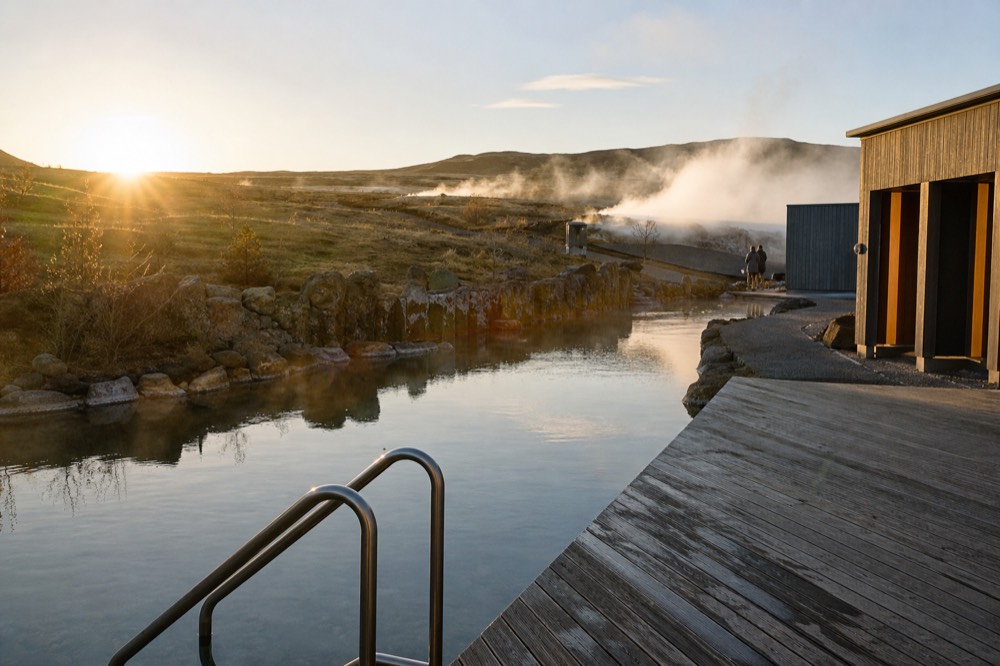
A final framing worth carrying onto the plane: this is a country where the official tourism body says plainly that there are no guarantees you will see the northern lights, even in the September-to-April season, and where the most-visited bathing venue sits beside an active volcanic system that has closed it at short notice in recent years. Planning around what is bookable, the lagoon slots, the transfers, the tours, is what leaves room for the things nobody can promise. The Icelandic Met Office publishes an aurora forecast with a six-day cloud overlay for the nights in between, and Lagoons in Iceland keeps the venue-by-venue detail for every stop on the list.
Before the practical questions, here are the three bookable experiences this page keeps returning to, one more time in one place.
Common Questions About Going To Iceland
What I Wish I Knew Before Going To Iceland?
Book lagoon tickets before you fly, because Blue Lagoon says entry is generally fully booked year-round and Vök Baths refuses summer walk-ins entirely. Expect the naked pre-swim shower, required by regulation 814/2010. Protect your hair with conditioner, remove silver jewellery, carry some Icelandic krona for the north, and book early to pay the from-price rather than the peak of the dynamic range.
Do you have to book Iceland lagoons in advance?
At the busiest venues, yes, and they say so themselves. Blue Lagoon calls pre-booking essential, Secret Lagoon cannot guarantee a spot without it, Hvammsvík requires advance online booking with a card, and Vök Baths accepts no walk-ins from June 1 to August 31. Fontana and Earth Lagoon Mývatn are among the few that still take walk-ins, subject to availability.
Is the naked shower rule really enforced?
Yes. The rule comes from Icelandic regulation 814/2010, which requires guests to wash without swimwear before entering pools and bathing facilities, and requires the facilities to provide soap and display the instruction. Venues from Blue Lagoon to Forest Lagoon restate it in their FAQs, and staff do monitor the showers.
Can you pay by card everywhere in Iceland?
Most lagoons on this roster take cards, but not all, and no official source supports the claim that cash is never needed. Forest Lagoon accepts Icelandic currency only, meaning ISK cash plus credit cards except American Express. Hvammsvík is fully cashless and also excludes American Express. Check each venue's payment page before you go.
What is the cheapest lagoon in Iceland?
On this site's roster, Secret Lagoon at Flúðir is the cheapest bookable ticket at from $35, against $117 for Sky Lagoon and $146 for Blue Lagoon's Comfort admission. Secret Lagoon also publishes a walk-in adult price of 4,500 ISK, with swimsuit and towel rental at 1,200 ISK each.
Will the geothermal water damage my hair?
Blue Lagoon says its silica-rich water is not harmful to hair but can make it temporarily stiff and difficult to manage, and recommends applying conditioner before entering and leaving it in while bathing. Conditioner is provided free at the showers. Silver and copper jewellery should also come off, since sulphur in the water causes tarnish.